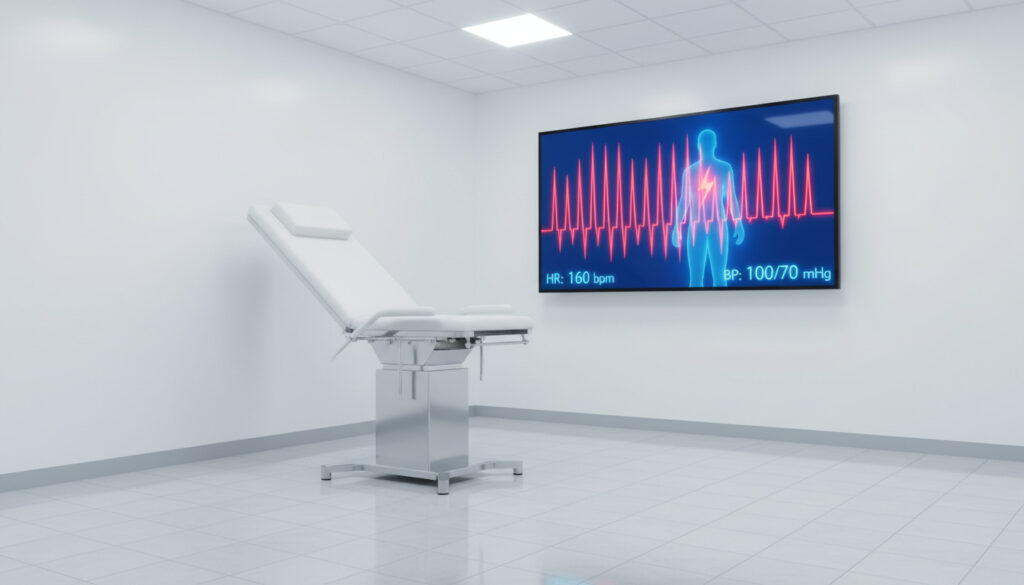
Postural Orthostatic Tachycardia Syndrome Symptoms – Key Insights
Postural orthostatic tachycardia syndrome represents a malfunction of the autonomic nervous system that disrupts blood circulation upon standing. When affected individuals assume an upright position, their heart rate accelerates by at least 30 beats per minute within ten minutes—often exceeding 120 beats per minute—without a corresponding drop in blood pressure. This physiological response triggers a cascade of debilitating symptoms ranging from cognitive impairment to gastrointestinal distress, affecting an estimated one to three million Americans, predominantly women between ages 15 and 50.
The condition belongs to a family of disorders known as dysautonomia, where automatic bodily functions fail to regulate properly. Patients frequently report that symptoms emerge immediately upon standing and may persist for hours after resuming a seated or supine position. Despite the severity of these manifestations, many individuals endure months of misdiagnosis before receiving appropriate evaluation.
Recognition of the specific symptom clusters associated with POTS remains essential for timely intervention. While the disorder significantly impacts quality of life, proper identification allows for management strategies that can restore functional capacity.
What Are the Most Common Symptoms of Postural Orthostatic Tachycardia Syndrome?
Definition
Heart rate increase ≥30 bpm on standing (≥40 bpm in adolescents) within 10 minutes
Hallmark Symptom
Lightheadedness and orthostatic intolerance with upright posture
Prevalence
1-3 million cases in the United States, primarily women aged 15-50
First Steps
Cardiological or neurological consultation if symptoms persist beyond six months
Key Clinical Insights
- Symptoms cluster predominantly during upright posture in approximately 90% of presentations
- Tachycardia frequently exceeds 120 beats per minute during orthostatic challenge
- Brain fog affects over 95% of patients, impairing short-term memory and concentration
- The condition often coexists with Ehlers-Danlos syndrome and myalgic encephalomyelitis/chronic fatigue syndrome
- While not immediately life-threatening, untreated symptoms severely compromise daily functioning
- Diagnosis requires specialized tilt table testing rather than standard electrocardiography alone
- Adolescents require distinct diagnostic thresholds compared to adult populations
| Symptom | Frequency | Primary Trigger |
|---|---|---|
| Tachycardia/Palpitations | 75%+ of patients | Standing upright |
| Lightheadedness/Dizziness | 97.6% | Postural changes |
| Brain Fog/Cognitive Issues | 95%+ | Cerebral blood flow reduction |
| Fatigue/Exercise Intolerance | Very common | Physical exertion |
| Chest Pain/Tightness | Common | Sympathetic overactivation |
| Gastrointestinal Distress | Frequent | Postprandial blood pooling |
| Visual Disturbances | Common | Orthostatic stress |
| Syncope/Near-syncope | Variable | Prolonged standing |
What Triggers POTS Symptoms and When Do They Occur?
Environmental and Physiological Triggers
Symptoms intensify predictably under specific physiological stressors. Heat exposure—whether from hot weather, warm baths, or fever—provokes vasodilation that exacerbates blood pooling in the lower extremities. Prolonged standing or sitting upright, particularly in crowded environments like queues or public transport, frequently precipitates orthostatic intolerance.
Dehydration and inadequate salt intake reduce plasma volume, amplifying cardiovascular strain. Skipped meals or high-carbohydrate ingestion can trigger postprandial hypotension and splanchnic blood pooling. Physical exertion often produces delayed symptom spikes, with patients reporting post-exertional malaise lasting hours or days following activity.
During acute exacerbations, patients may experience such profound orthostatic intolerance that remaining upright for more than a few minutes becomes impossible, potentially disrupting employment, education, and daily activities.
Circadian and Hormonal Patterns
Many patients report heightened symptoms upon waking, attributed to nocturnal fluid shifts and relative dehydration following sleep. Menstrual cycles frequently correlate with symptom fluctuations, with premenstrual and menstrual phases often triggering worsening tachycardia and fatigue. Viral infections, including common colds and post-viral syndromes, commonly precipitate symptom surges or initial disease onset.
How Does POTS Feel and What Are Severe Symptoms?
The Cognitive Experience
Patients describe brain fog as a distinctive cognitive impairment characterized by slowed processing speed, word-finding difficulties, and short-term memory deficits. This mental cloudiness resembles the sensation of thinking through syrup—functional cognition becomes laborious and fragmented. Concentration difficulties often prevent reading comprehension, complex task completion, or sustained attention to conversations.
Physical Manifestations
Cardiovascular sensations include forceful or skipping heartbeats, chest tightness mimicking cardiac angina, and the sensation of blood pounding in the neck. Visual disturbances range from tunnel vision to photophobia and blurred sight. Many patients develop “coat hanger” pain—tension and ache across the neck and shoulders resulting from muscle hypoperfusion.
Blood pooling manifests as purple discoloration in the legs and feet upon standing, accompanied by cold, painful extremities. Gastrointestinal symptoms include bloating, early satiety, nausea, and alternating bowel patterns resembling irritable bowel syndrome. Gastroparesis—delayed stomach emptying—compounds nutritional challenges.
Progression to Disability
Severe presentations can render patients bedbound or wheelchair-dependent during flares. Exercise intolerance becomes so pronounced that walking short distances provokes days of recovery. Some individuals experience syncope or near-syncope multiple times weekly, creating injury risk and significant psychological burden.
What Causes POTS Symptoms?
Neurological Mechanisms
The symptoms stem fundamentally from autonomic dysregulation. Sympathetic nervous system overactivation attempts to compensate for blood pooling in the lower body, producing excessive tachycardia and vasoconstriction. Small fiber neuropathy affects roughly 50% of patients, damaging the nerves that regulate blood vessel constriction and resulting in venous pooling and hypovolemia.
Adolescents aged 12 to 19 require a heart rate increase of at least 40 beats per minute for diagnosis, whereas adults qualify with an increase of 30 beats per minute, reflecting developmental cardiovascular differences.
Cardiovascular and Volume Factors
Many patients exhibit reduced plasma volume or elevated plasma norepinephrine levels while standing. Post-viral onset occurs frequently, with recent attention focusing on connections to Long COVID and other viral triggers. The condition often emerges following infections, surgeries, or traumatic injuries, though genetic predispositions may contribute to susceptibility.
Maintaining a daily log of heart rate measurements taken while supine and after standing, alongside symptom severity ratings, provides clinicians with objective data crucial for accurate diagnosis and treatment planning.
When Do POTS Symptoms Appear and Progress?
- Immediate onset: Symptoms manifest within seconds to minutes of standing, often before completing the orthostatic transition
- Postprandial worsening: Intensity increases 30-90 minutes after meals due to splanchnic blood pooling
- Morning exacerbation: Peak severity frequently occurs upon waking due to overnight fluid loss and recumbency
- Monthly patterns: Menstrual cycles often correlate with symptom fluctuations, particularly during luteal and menstrual phases
- Post-exertional crashes: Physical activity may trigger prolonged symptom spikes lasting 24-72 hours beyond the exertion
- Diagnostic delay: Average time from symptom onset to correct diagnosis exceeds six months, with many patients waiting years
- Flare cycles: Symptoms may remit partially between flares or persist continuously depending on subtype and management
What Is Established About POTS Symptoms Versus What Remains Uncertain?
| Established Facts | Areas of Uncertainty |
|---|---|
| Heart rate increases of 30-40 bpm upon standing constitute primary diagnostic criteria | The precise multifactorial etiology remains unidentified in many patients |
| Absence of significant orthostatic hypotension distinguishes POTS from other syncopal disorders | No universally effective cure exists; management strategies vary significantly in efficacy |
| Autonomic dysfunction and small fiber neuropathy contribute to pathophysiology in documented cases | Long-term prognosis and spontaneous remission rates require further longitudinal study |
| Post-viral onset occurs in substantial patient subsets | Exact mechanisms linking POTS to Long COVID continue under investigation |
| Symptoms predominantly affect women and teenagers at higher rates than other demographics | Genetic markers predicting susceptibility remain largely undefined |
Why Understanding POTS Symptoms Matters
The symptom complex of POTS often masquerades as anxiety disorders, deconditioning, or primary cardiac pathology, leading to inappropriate psychiatric referrals or invasive cardiac workups that yield negative results. Teenage patients particularly face skepticism regarding the severity of their complaints, complicating educational accommodations and social development.
Recognition of the post-viral connection has intensified following the COVID-19 pandemic, as increasing numbers of Long COVID patients present with orthostatic intolerance meeting POTS criteria. This epidemiological shift underscores the necessity of accurate symptom recognition among primary care providers and specialists. Additional context regarding health data trends can be found through Twitter Share Price analytics.
What Do Medical Authorities Say About POTS Symptoms?
POTS is defined by excessive tachycardia upon standing in the absence of orthostatic hypotension, reflecting an inability to maintain appropriate vascular tone and cerebral perfusion.
— Dysautonomia International
Medical consensus emphasizes that while POTS symptoms create significant disability, the condition does not typically threaten life expectancy directly. Treatment approaches focus on symptom management through volume expansion, physical counter-maneuvers, and autonomic modulation rather than curative intervention.
Key Takeaways on Postural Orthostatic Tachycardia Syndrome Symptoms
Postural orthostatic tachycardia syndrome manifests through diverse symptoms dominated by orthostatic intolerance, cognitive dysfunction, and autonomic dysregulation. The diagnostic threshold requires specific heart rate increases upon standing, with symptom severity varying from mild inconvenience to profound disability. Recognition of triggers including heat, standing, and postprandial states enables patients to implement compensatory strategies. While the exact etiology remains incompletely understood in many cases, proper identification facilitates management that can restore functional quality of life. For additional international health perspectives, see Marks and Spencer Australia.
Frequently Asked Questions
Can POTS symptoms come and go?
Yes, many patients experience fluctuating symptom severity with periods of remission interspersed with flares. Triggers such as illness, stress, or hormonal changes often precipitate temporary worsening.
Is POTS life-threatening?
POTS does not typically reduce life expectancy, though severe symptoms can significantly impact quality of life and increase injury risk from fainting episodes. Proper management helps mitigate these risks.
What are POTS symptoms in children?
Children and teenagers experience similar symptoms to adults but require a higher diagnostic threshold of 40 bpm heart rate increase. They frequently report exercise intolerance, fatigue, and difficulty concentrating at school.
Are POTS symptoms worse in the morning?
Many patients report peak severity upon waking due to overnight fluid shifts and relative dehydration, though individual patterns vary significantly.
How is POTS diagnosed from symptoms?
Clinicians confirm diagnosis through tilt table testing or standing vital signs demonstrating the characteristic heart rate increase without significant blood pressure drop, alongside symptom correlation.
Can POTS symptoms worsen after eating?
Yes, postprandial blood flow to the digestive system frequently exacerbates orthostatic symptoms, particularly following high-carbohydrate meals.
What does POTS chest pain feel like?
Chest pain in POTS typically presents as tightness or pressure unrelated to cardiac ischemia, often accompanied by palpitations and exacerbated by upright posture.
More related posts
 Qantas Home Insurance – Reviews, Coverage, Claims Guide
 Lucas Bravo: Age, Height, Relationship, and Career Facts
 Water Filter System Guide: Best for PFAS, Chlorine & Cost
 Zak Butters: Trade Rumors, Fine, Contract & Personal Life 2025
 Edge of Tomorrow Box Office Flop? Why It Became a Cult Hit
 Springsteen Deliver Me From Nowhere – Nebraska Drama Explained
 Kris Marshall: Accident, Death in Paradise Exit & Beyond Paradise
 Manuel Garcia-Rulfo: Lincoln Lawyer, Dating & Next Projects