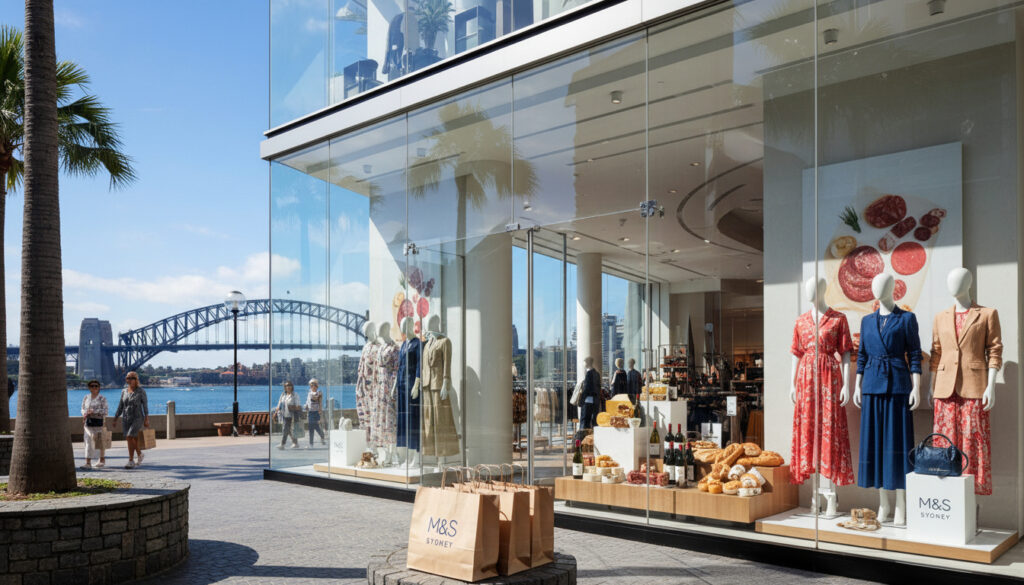
Marks and Spencer Australia – Where to Shop in 2025
Marks & Spencer maintains no standalone retail presence in Australia, yet British fashion lines have reappeared in select department stores following a wholesale partnership launched in recent years. The retailer’s current strategy relies entirely on local partnerships rather than direct operations, marking a significant departure from its previous attempt at market penetration which ended in 2001.
Contemporary availability centers on David Jones, where womenswear, menswear, and lingerie collections occupy floor space in flagship locations. This arrangement represents the brand’s first organized presence since shuttering all company-owned outlets nearly twenty-five years ago, though official corporate channels remain silent regarding direct international shipping capabilities to Australian addresses.
Historical records indicate the British institution founded by Michael Marks in 1884 and established as Marks & Spencer in 1894 once operated physical stores across the continent for three decades. Corporate archives document the UK origins, yet yield no specifications regarding Australian delivery services, store counts during the operational period, or current expansion timelines.
Does Marks & Spencer operate stores in Australia?
Current Status
No standalone Marks & Spencer stores operate in Australia. Physical merchandise availability exists solely through wholesale partnerships with domestic retailers.
Physical Access
Products accessible in 24 to 40 David Jones department store locations nationwide, including Sydney and Melbourne flagships.
Direct Online
Official M&S websites provide no confirmed international delivery options to Australian addresses based on current documentation.
Historical Footprint
Previously maintained company-owned stores from 1972 through 2001 before complete market exit.
Key Market Insights
- Zero corporate-owned retail locations exist in Australia as of 2025
- Exclusive wholesale partnership with David Jones commenced 2023-2024
- Fashion categories include womenswear, menswear, lingerie, and sleepwear
- Previous Australian operations lasted approximately 29 years before 2001 closure
- Market entry initially occurred in 1972 with standalone store model
- No evidence of direct e-commerce shipping from UK sites to Australian consumers
Operational Facts
| Fact | Details |
|---|---|
| Direct Physical Stores | None operational |
| Australian Partnership | Exclusive arrangement with David Jones (2023-2024 launch) |
| Product Categories Available | Fashion, lingerie, sleepwear (food not included) |
| Store Locations | 24-40 David Jones outlets including Sydney and Melbourne flagships |
| Previous Operations | 1972-2001 (approximately 29 years) |
| Company Founded | 1884 in Leeds, UK; incorporated as Marks & Spencer 1894 |
| Reason for Prior Exit | Declining sales and market challenges |
| Direct Online Shipping | Unconfirmed; no official documentation found |
How can Australian shoppers access Marks & Spencer products?
Contemporary access requires navigating domestic retail partnerships rather than direct brand engagement. The wholesale model adopted by M&S history in Australia represents a fundamental strategic shift from the previous direct-investment approach.
The David Jones Partnership Route
Australian consumers encounter M&S merchandise exclusively through David Jones, the premium department store chain established in 1838. Industry reports confirm the partnership launched initially with lingerie and sleepwear collections before expanding into broader apparel categories.
The arrangement encompasses between 24 and 40 physical locations, with particular concentration in high-traffic flagships. Shoppers may also purchase through the David Jones e-commerce platform, effectively outsourcing distribution and customer service to the local partner rather than the British parent company.
M&S collections appear in David Jones stores and on davidjones.com, not through marksandspencer.com for Australian delivery. Inventory focuses on fashion and lingerie categories rather than food or homewares.
Direct Online Purchase Limitations
Investigation of official corporate channels and consumer-facing websites reveals no affirmative documentation regarding international shipping to Australian addresses. The UK-based e-commerce platform appears restricted to domestic and select European markets, though specific policy details remain unverified.
This information vacuum distinguishes M&S from competitors offering explicit international delivery calculators and shipping guarantees. Consumers attempting direct purchases encounter ambiguous or unavailable delivery options at checkout, suggesting the wholesale partnership constitutes the sole authorized distribution channel for the Australian market.
What is the history of Marks & Spencer in Australia?
Corporate timelines document the British retailer’s global expansion ambitions, though Australian operations represent a relatively brief chapter in the company’s 140-year history. Understanding this trajectory illuminates current strategic caution.
Initial Market Entry
External retail analyses indicate M&S first established Australian stores in 1972, deploying the standardized format that proved successful in British high streets. The company operated through company-owned outlets rather than franchised locations, maintaining direct control over merchandising and brand presentation.
This period coincided with aggressive international expansion as the retailer sought to replicate domestic success in Commonwealth markets. The Australian venture lasted nearly three decades, suggesting initial viability before structural market changes disrupted profitability.
Closure and Market Exit
By 2001, mounting operational challenges compelled complete withdrawal. Market reports cite declining sales figures and escalating competition from both established local chains and emerging international brands as primary dissolution factors. All physical locations closed by year’s end, terminating nearly thirty years of direct retail presence.
Numerous outdated sources incorrectly list M&S among current Australian retailers. The company exited completely in 2001 and maintained zero presence until the 2023 wholesale partnership. Current shopping requires David Jones specifically, not standalone M&S locations.
What products are currently available from M&S in Australia?
The Marks & Spencer fashion launch in David Jones stores emphasizes apparel over the brand’s renowned food halls. This selective distribution reflects both logistical constraints and market testing.
Fashion and Lingerie Categories
Trade publications confirm availability spans womenswear, menswear, and particularly lingerie lines. The initial launch prioritized intimate apparel and sleepwear before expanding into seasonal clothing collections, suggesting a test-and-learn approach to inventory depth.
Merchandise selection mirrors British core ranges rather than localized adaptations, offering Australian consumers authentic M&S styling without the overhead of dedicated store networks.
Food and Home Goods Limitations
Despite the brand’s British reputation for prepared foods and wine, no evidence suggests these categories accompany the fashion partnership. Official press releases specify fashion-only distribution, excluding the food halls that generate significant UK revenue.
Current Australian availability encompasses clothing and lingerie exclusively. M&S Food, home furnishings, and beauty products remain unavailable through authorized channels, with no announced timeline for category expansion.
Timeline of Marks & Spencer’s Australian Presence
- : Michael Marks establishes penny stall at Kirkgate Market, Leeds — source
- : Formal partnership with Tom Spencer creates Marks & Spencer entity
- : Initial Australian market entry with standalone retail stores
- : Complete market exit due to declining sales and operational challenges; all stores closed
- : Wholesale partnership launch with David Jones, marking return via third-party distribution
Confirmed Details and Persistent Uncertainties
| Established Information | Information Remaining Unclear |
|---|---|
| No direct M&S stores operate in Australia | Specific international shipping policies and costs from UK sites |
| David Jones exclusively stocks M&S fashion (2023+) | Future plans for standalone store expansion or additional partnerships |
| Previous operations ceased completely in 2001 | Potential availability of M&S Food through import channels |
| Company founded 1884 in Leeds, UK | Precise sales performance metrics for current David Jones partnership |
| Fashion categories include womenswear, menswear, and lingerie | Timeline for potential category expansion beyond apparel |
Market Context and Strategic Background
The British retailer’s ancestry traces to Victorian-era penny bazaars, evolving into a high-street staple through the twentieth century. Historical archives document this trajectory from market stall to multinational operation, though Australian ventures consistently struggled against entrenched local competition and distinct seasonal cycles.
The current wholesale model mitigates capital risk while maintaining brand visibility. By leveraging David Jones’ established logistics and real estate networks, M&S avoids the fixed costs that burdened the 1972-2001 operation. This asset-light approach reflects broader industry trends favoring partnership over direct foreign investment in saturated retail markets.
Australian consumers consequently encounter the brand as a concession within a larger department store ecosystem rather than as a standalone destination, fundamentally altering the shopping experience compared to British high street encounters.
Source Documentation and Official Statements
Primary verification derives from corporate press releases announcing the David Jones partnership, supplemented by trade journal reportage. Official announcements confirm the wholesale arrangement launched across 24 to 40 locations, emphasizing lingerie and sleepwear initial availability.
Secondary sources including retail industry publications provide contextual analysis regarding the 2001 exit and subsequent market conditions. Corporate history pages verify founding dates and UK origins, though conspicuously omit Australian operational details, creating reliance on third-party documentation for timeline specifics.
Current Shopping Options Summary
Australian consumers seeking Marks & Spencer merchandise must visit David Jones physical stores or their associated e-commerce platform, as no direct brand stores operate nationally and official UK websites offer unverified shipping capabilities. This constrained access reflects deliberate strategic choices following the company’s 2001 market withdrawal, with M&S history in Australia suggesting continued reliance on partnership models rather than direct investment for the foreseeable future.
Common Questions Regarding M&S in Australia
Can I order directly from the M&S UK website to Australia?
No official documentation confirms international delivery to Australian addresses. The UK website appears restricted to domestic and select European markets, with no Australia-specific shipping options verified.
Does Marks & Spencer have any standalone stores in Australia?
No. All company-owned stores closed in 2001. Current availability exists exclusively through David Jones department stores under a wholesale partnership arrangement.
Which Australian retailer stocks M&S products?
David Jones exclusively stocks M&S fashion lines in 24 to 40 locations nationwide, including Sydney and Melbourne flagships, as well as online.
Why did Marks & Spencer leave Australia in 2001?
Declining sales and increasing market competition rendered operations unprofitable. The company closed all outlets after approximately 29 years of direct retail presence.
Can I buy M&S food products in Australia?
No. The current partnership with David Jones encompasses fashion, lingerie, and sleepwear only. Food halls and grocery items remain unavailable through authorized channels.
When did M&S return to the Australian market?
The brand re-entered via David Jones partnership in 2023-2024, marking the first availability since the 2001 closure of standalone stores.
What types of M&S products are available at David Jones?
Womenswear, menswear, lingerie, and sleepwear comprise current offerings. The initial launch emphasized intimate apparel before expanding into broader clothing categories.
More related posts
 Travis Head: Biography, Career Stats, Controversies & More
 Sean Kaufman: Biography, Age, Relationship Rumors, and More
 Naoya Inoue: Undefeated Record & Next Fight (2025)
 What Does 6-7 Mean Slang? Rude Gesture & TikTok Emoji
 Liam Payne Cause of Death: What We Know
 Madison Beer: Age, Relationships, LGBTQ Identity & Mental Health
 Hailie Jade: Biography, Husband, and Eminem Relationship
 RDW Blood Test: High, Low Levels and What They Mean