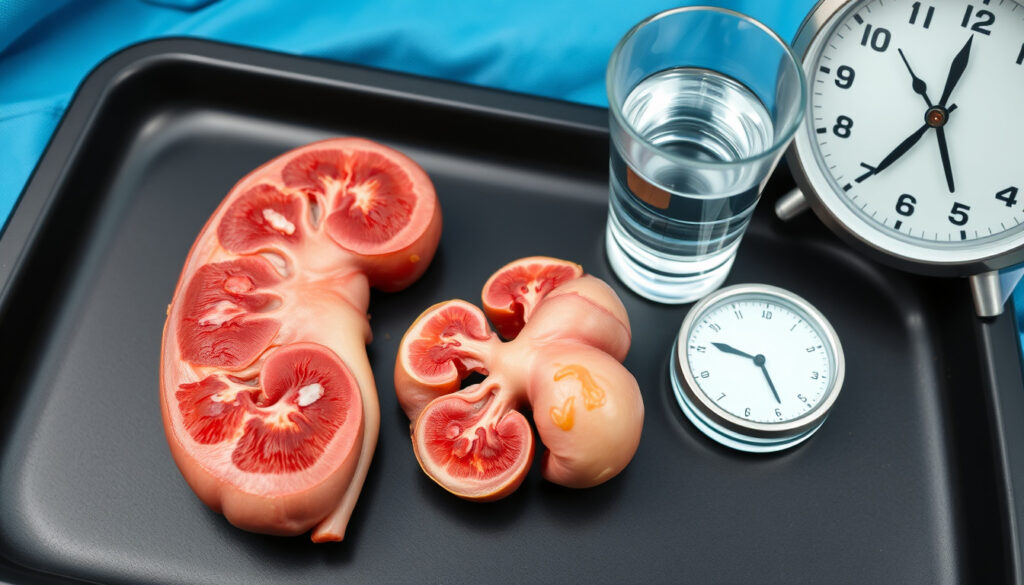
Chronic Kidney Disease: Symptoms, Causes, Stages, Life Expectancy
If you or someone you know has been diagnosed with chronic kidney disease, you’re not alone—nearly 37 million adults in the United States are living with this condition. Understanding the stages, symptoms, and what to expect can make a real difference in managing the disease.
Prevalence in the US: 37 million adults (about 15% of the population) ·
Leading causes: Diabetes and high blood pressure ·
Stages: 5 stages based on eGFR ·
Life expectancy without treatment: Varies widely; stage 5 on dialysis averages 5–10 years ·
Early detection benefit: Can slow progression and delay kidney failure
Quick snapshot
- Diabetes is the leading cause of chronic kidney disease (Mayo Clinic, leading academic medical center)
- CKD is progressive and often irreversible (NIDDK, US federal research institute)
- eGFR decline can be slowed with proper treatment (Cleveland Clinic, leading hospital system)
- Exact mechanism of progression varies among individuals (PMC, peer-reviewed medical literature)
- Optimal dietary restrictions for all stages are not fully determined (WebMD, health information publisher)
- Long-term effects of newer medications are still being studied (National Kidney Foundation, patient advocacy organization)
- Most people with CKD progress slowly over years; early treatment can delay kidney failure (Cleveland Clinic)
- Stage 3B (eGFR 30–44) carries higher mortality risk than Stage 3A (WebMD)
- If you have risk factors (diabetes, hypertension, family history), get tested with blood and urine tests (Mayo Clinic)
- Work with your doctor to manage underlying conditions and slow progression (NIDDK)
Five key facts, one pattern: the earlier CKD is caught, the better the outcomes. Here’s what the data shows.
| Fact | Value |
|---|---|
| Prevalence in US | 37 million adults |
| Leading cause | Diabetes |
| Stage 5 treatments | Dialysis or kidney transplant |
| Early detection | Can slow progression |
| Common symptom | Fatigue |
The takeaway: Early detection is the single most powerful tool—yet more than 9 in 10 people with early CKD don’t know they have it.
What are 5 symptoms of chronic kidney disease?
Early warning signs
- Fatigue and low energy (WebMD)
- Swelling in hands, feet, or ankles (edema) (Mayo Clinic, leading academic medical center)
- Changes in urination (more or less frequent, foamy or bubbly urine) (National Kidney Foundation, patient advocacy organization)
- Shortness of breath (WebMD)
- Unexplained itching or dry skin (NIDDK, US federal research institute)
Common symptoms
Many people in stages 1–3 have no symptoms at all. When symptoms do appear, they may include back pain, irregular urination patterns, and high blood pressure. Stage 3 is often the first time people notice something is wrong (Cleveland Clinic, leading hospital system).
When to see a doctor
If you experience any combination of the above symptoms—especially if you have diabetes or high blood pressure—schedule a kidney function test (eGFR and urine albumin). The National Kidney Foundation recommends annual screening for anyone with risk factors (National Kidney Foundation, patient advocacy organization).
What is the cause of chronic kidney disease?
Diabetes and hypertension
- Diabetes (types 1 and 2) is the leading cause, responsible for nearly half of all CKD cases (NIDDK, US federal research institute)
- High blood pressure is the second most common cause, damaging the small blood vessels in the kidneys (Mayo Clinic, leading academic medical center)
Other causes
- Glomerulonephritis (inflammation of kidney filters) (National Kidney Foundation, patient advocacy organization)
- Polycystic kidney disease (inherited condition causing cysts) (Mayo Clinic)
- Prolonged obstruction of the urinary tract (enlarged prostate, kidney stones) (WebMD, health information publisher)
Risk factors
Age over 60, family history of kidney disease, obesity, smoking, and autoimmune conditions all increase risk. The combination of diabetes and hypertension is especially dangerous: each condition accelerates kidney damage caused by the other. According to research in the PMC educational review, even a moderate reduction in eGFR (to 45–59 mL/min) reduces life expectancy by about 20% in adults aged 30–44.
Two-thirds of all CKD cases are driven by just two conditions—diabetes and hypertension. Managing those is the single most effective strategy to prevent or slow the disease.
Should I be worried if I have chronic kidney disease?
Understanding CKD progression
Disease progression is not inevitable. With aggressive treatment of underlying causes and lifestyle changes, many people remain stable for years. Stage 3A is the most common stage and often manageable (Cleveland Clinic, leading hospital system). However, stage 3B carries higher mortality risk—one large review found that 6% of stage 3 patients die within 3 years, rising to 51% within 10 years (WebMD, citing a survey of 13 studies).
Managing risk
- Control blood pressure (target <130/80 mmHg) and blood sugar (National Kidney Foundation, patient advocacy organization)
- Follow a kidney-friendly diet (limit sodium, phosphorus, potassium) (NIDDK, US federal research institute)
- Take medications as prescribed (ACE inhibitors, SGLT2 inhibitors) (Mayo Clinic)
When to seek medical advice
Consult a nephrologist if your eGFR drops below 30 mL/min, if you have unexplained symptoms, or if you notice a rapid decline in kidney function. Early referral can reduce the risk of needing emergency dialysis or hospitalization (National Kidney Foundation, patient advocacy organization).
What this means: Worry is a useless emotion; action is not. CKD is serious, but most people can slow progression dramatically with consistent medical management. The real danger is ignoring it.
What is the life expectancy of chronic kidney disease?
Factors affecting prognosis
- Age at diagnosis—younger people have longer remaining years but more lifetime risk (PMC educational review)
- Stage at diagnosis—stage 1–3 have near-normal life expectancy with treatment (Mayo Clinic, leading academic medical center)
- Presence of other chronic conditions (heart disease, diabetes) (WebMD, health information publisher)
Life expectancy by stage
For a 60-year-old with stage 3 CKD, one estimate puts average remaining life at around 8 years without advanced management (Century Medical & Dental, clinical practice source). However, this figure varies widely. Stage 4 patients who reach dialysis often have a median survival of 5–10 years, while a kidney transplant can restore near‑normal life expectancy.
Impact of treatment
- Dialysis: median survival 5–10 years (NIDDK, US federal research institute)
- Kidney transplant: 5-year survival >90% (National Kidney Foundation)
- Conservative management (no dialysis) for stage 5: survival typically weeks to months without treatment (Amedisys, home health provider)
What are the stages of chronic kidney disease?
Stage 1: Mild damage
- eGFR ≥90 mL/min, but other signs of kidney damage (e.g., protein in urine) are present (Cleveland Clinic, leading hospital system)
- No symptoms; kidney function is normal
Stage 2: Mild loss
- eGFR 60–89 mL/min with evidence of damage (Mayo Clinic, leading academic medical center)
- Often still symptom‑free
Stage 3: Moderate loss
- Stage 3A: eGFR 45–59 mL/min; Stage 3B: eGFR 30–44 mL/min (Mayo Clinic, leading academic medical center)
- Symptoms often appear here: swelling, back pain, changes in urination (WebMD, health information publisher)
- Complications: high blood pressure, anemia, bone disease (WebMD, health information publisher)
Stage 4: Severe loss
- eGFR 15–29 mL/min (Mayo Clinic, leading academic medical center)
- More pronounced symptoms; preparation for dialysis or transplant begins
Stage 5: Kidney failure
- eGFR <15 mL/min (Mayo Clinic, leading academic medical center)
- Dialysis or transplant required; without treatment, fatal within weeks (Amedisys, home health provider)
Eight hundred thousand people in the US live with end‑stage renal disease (Amedisys, home health provider). The staging system isn’t just academic—it drives treatment decisions. Stage 3 is the critical inflection point where intervention can still prevent kidney failure.
Confirmed facts
- Diabetes and hypertension cause most CKD cases (NIDDK, US federal research institute)
- CKD is progressive and irreversible (Mayo Clinic, leading academic medical center)
- eGFR decline can be slowed with treatment (Cleveland Clinic, leading hospital system)
What’s unclear
- Exact progression mechanism varies among individuals (PMC, peer-reviewed medical literature)
- Optimal dietary restrictions for all stages not fully determined (WebMD, health information publisher)
- Long-term effects of newer medications still studied (National Kidney Foundation, patient advocacy organization)
“Chronic kidney disease means your kidneys are damaged and can’t filter blood the way they should.”
“Early stages of CKD often have no signs or symptoms.”
Mayo Clinic (leading academic medical center)
“Diabetes and high blood pressure are the two leading causes of chronic kidney disease.”
For someone with stage 3 CKD, the choice is clear: work closely with your healthcare team to manage blood pressure, blood sugar, and lifestyle—or face faster progression to kidney failure. Life expectancy is not a fixed number; it’s a function of stage, age, and how aggressively you treat underlying causes. The data shows that early intervention can add years of quality life, while delay carries steep costs. For the 37 million Americans with CKD, the path forward is rooted in screening, consistent medication, and honest conversations with your nephrologist.
Frequently asked questions
Can chronic kidney disease be reversed?
No, CKD is considered irreversible. However, treatment can slow or halt progression, especially when caught early. Damage to the kidneys cannot be undone, but managing the underlying causes can preserve remaining function (Mayo Clinic, leading academic medical center).
What is the difference between acute and chronic kidney disease?
Acute kidney injury (AKI) develops suddenly, often from dehydration, infection, or medication, and can be reversible. Chronic kidney disease (CKD) develops over months or years and is usually permanent. AKI can sometimes lead to CKD if not treated properly (NIDDK).
How is chronic kidney disease diagnosed?
Doctors use two main tests: a blood test for eGFR (estimated glomerular filtration rate) and a urine test for albumin (protein). A persistent eGFR below 60 mL/min for three months or more usually confirms CKD (National Kidney Foundation, patient advocacy organization).
What foods should I avoid with chronic kidney disease?
Limiting sodium, phosphorus, and potassium is common as CKD advances. High-sodium processed foods, dairy (high phosphorus), and potassium-rich fruits like bananas and oranges are often restricted. A registered dietitian can tailor a plan to your stage (NIDDK, US federal research institute).
Is kidney disease hereditary?
Some forms of kidney disease, such as polycystic kidney disease, are inherited. However, most CKD is caused by diabetes and hypertension, which have genetic components but are strongly influenced by lifestyle. A family history of kidney disease is a risk factor (Mayo Clinic, leading academic medical center).
Can chronic kidney disease cause high blood pressure?
Yes. Damaged kidneys lose the ability to regulate fluid and salt balance, which can raise blood pressure. This creates a dangerous cycle: high blood pressure damages kidneys further, worsening hypertension. Managing blood pressure is a cornerstone of CKD treatment (National Kidney Foundation, patient advocacy organization).
What medications are commonly used for chronic kidney disease?
ACE inhibitors or ARBs for blood pressure control and kidney protection; SGLT2 inhibitors (e.g., dapagliflozin) to slow progression; diuretics for fluid retention; and erythropoietin-stimulating agents for anemia. Medications are tailored to stage and comorbidities (WebMD, health information publisher).
More related posts
 John Nolan: British Actor, Musician, and TV Character
 Clint Eastwood 2025: Alive, Projects, Political Views & Net Worth
 Judy Davis: Biography, Career & Private Life
 Jessica Marais: What Happened to Her Career and Life
 How to Book Cheap Hotels in Ireland: Top Tips & Sites
 Capricorn Horoscope Today – Love Career Money Health Insights
 Jonah Lomu: All Blacks Legend, Speed, Health and Legacy
 SpongeBob SquarePants: Character Facts, Theories & FAQs