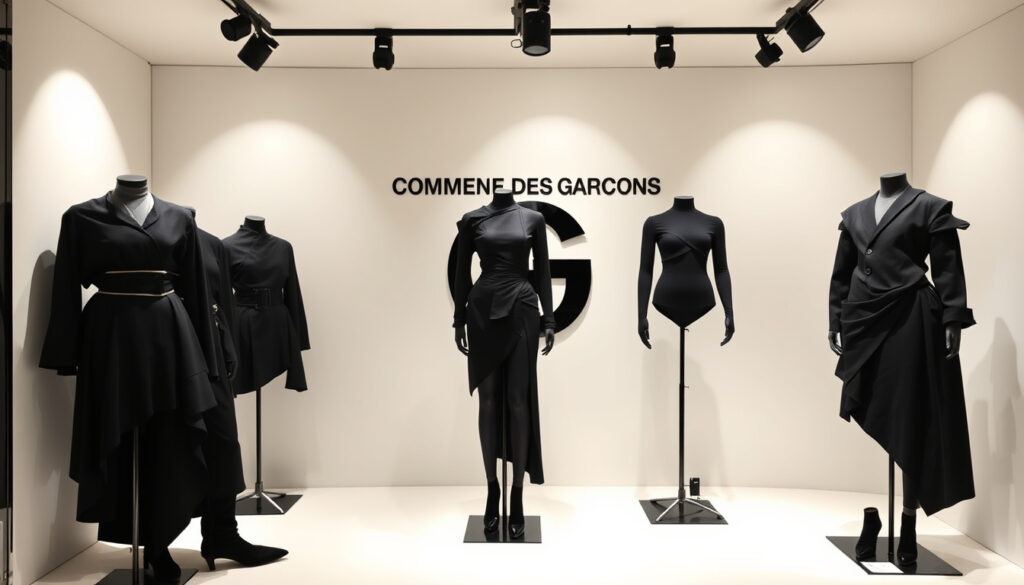
Comme des Garcons – History, Founder and Buying Guide
Comme des Garçons stands as one of the most influential fashion houses of the modern era, challenging conventional aesthetics and redefining what clothing can express. The Japanese label, founded in Tokyo in 1969, has become synonymous with avant-garde design, deconstructed silhouettes, and an uncompromising approach to fashion that prioritizes concept over convention.
While its French name might suggest Parisian origins, the brand’s roots lie firmly in Japan, where founder Rei Kawakubo built a design philosophy centered on questioning established norms. Over more than five decades, Comme des Garçons has grown from a small Tokyo boutique into a global fashion phenomenon, influencing everything from high-end runway collections to streetwear collaborations.
This exploration examines the brand’s origins, design philosophy, key collections, and its current position in the luxury fashion landscape.
What Is Comme des Garçons?
Comme des Garçons is a Japanese fashion house that has fundamentally shaped contemporary fashion through its radical approach to design and retail. The brand operates across multiple product categories, including womenswear, menswear, perfume, and accessories, while maintaining a distinct visual identity recognizable worldwide.
Key Insights
- Pioneered deconstructed fashion with its groundbreaking 1981 Paris debut
- Launched Dover Street Market, a revolutionary multi-brand retail concept
- Collaborated with major brands including Nike, Supreme, Converse, and Louis Vuitton
- Signature aesthetic features all-black, oversized silhouettes with unfinished details
- Established successful fragrance division in 1993
- Production spans France, Japan, Spain, and Turkey
| Key Fact | Details |
|---|---|
| Full Name | Comme des Garçons Co., Ltd. |
| Revenue Estimate | $300M+ annually |
| Flagship Location | Aoyama, Tokyo |
| Iconic Show | 1981 Paris debut |
| Creative Director | Rei Kawakubo |
| Sub-Brand | Dover Street Market |
What Does Comme des Garçons Mean and How Do You Pronounce It?
The name “Comme des Garçons” translates from French as “like some boys” or simply “like boys.” This seemingly straightforward translation carries deeper cultural significance, drawing inspiration from Françoise Hardy’s 1962 song “Tous les garçons et les filles,” which includes the lyric “Comme les garçons et les filles de mon âge.”
The French name choice reflects Kawakubo’s playful approach to fashion conventions, blending Japanese minimalism with European cultural references. Despite its linguistic origins, the brand remains fundamentally Japanese in its design philosophy and operations.
The correct pronunciation is “comb-day garr-sawn,” with the final “n” softened. This phonetic guide helps ensure proper reference to one of fashion’s most distinctive names.
The brand name was inspired by a line from Françoise Hardy’s 1962 French song “Tous les garçons et les filles,” reflecting Kawakubo’s interest in French culture during the era.
Who Founded Comme des Garçons and What Is Its History?
Rei Kawakubo, born in Tokyo in 1942, founded Comme des Garçons and serves as its creative director. Unlike many fashion designers who pursued formal design education, Kawakubo’s path into fashion was unconventional. She studied fine arts and literature before entering the fashion industry in the 1960s.
Kawakubo launched her womenswear label in 1969, initially creating pieces that were met with modest interest in Japan. The brand established itself as an official company in 1978 and introduced its menswear line, “Homme Comme des Garçons,” in the same year, significantly expanding its market reach.
The 1981 Paris Revolution
The 1981 Paris Fashion Week debut marked a turning point for both the brand and fashion history. Kawakubo’s collection, characterized by heavy use of black distressed fabrics, unfinished seams, and asymmetrical cuts, shocked Parisian critics who were accustomed to more conventional European aesthetics.
French fashion journalists initially dismissed the collection as “Hiroshima chic” and questioned whether it constituted fashion at all. However, the bold aesthetic eventually gained recognition as pioneering work that challenged fundamental assumptions about beauty, gender, and clothing construction.
This avant-garde approach positioned Kawakubo as one of the original architects of what became known as the “crow gang” movement, characterized by dark, monochromatic palettes and deliberately anti-fashion silhouettes. The influence of this aesthetic continues to resonate throughout contemporary fashion.
Modern Era and Retail Innovation
In 2004, Rei Kawakubo and her husband Adrian Joffe established Dover Street Market, a groundbreaking retail concept that combined high fashion with accessible streetwear in carefully curated spaces. The venture represented an extension of the brand’s innovative philosophy into retail design, influencing how luxury fashion is experienced globally.
Today, while the brand maintains its headquarters in Tokyo, it operates a significant Paris office that coordinates its international operations and runway presentations.
Kawakubo’s approach emphasizes questioning established conventions. Her 1998 advertising campaign, which featured unconventional subjects, exemplified her rebellious approach to brand presentation and marketing.
What Are Comme des Garçons Key Lines and Collaborations?
The brand operates multiple distinct lines, each serving different market segments while maintaining the core design philosophy established by Kawakubo. Understanding these divisions helps clarify the brand’s structure and accessibility.
Comme des Garçons Play
The Play collection represents the brand’s most recognizable and commercially successful line, bridging the gap between avant-garde design and accessible luxury. The collection features the iconic heart logo with eyes, which has become one of fashion’s most recognizable symbols.
Production of Play items spans multiple countries, including Japan, Spain, and Turkey, with some products manufactured in France. This global production approach allows the line to maintain quality while meeting demand across international markets.
Perfume and Fragrance
In 1993, Comme des Garçons expanded into fragrance with Comme des Garçons Parfums. The fragrance division has become a significant revenue stream and allows broader consumer access to the brand’s aesthetic. The perfumes are known for their unconventional scent profiles and distinctive bottle designs.
Collaborations
Strategic partnerships have been instrumental in expanding Comme des Garçons’ reach beyond traditional fashion audiences. The brand has collaborated with numerous international brands, including Nike, Supreme, Converse, and Louis Vuitton, creating limited-edition products that sell out rapidly.
These collaborations demonstrate the brand’s ability to translate its distinctive aesthetic into various product categories while maintaining relevance across different consumer demographics.
As of 2004, the company divides operations between handmade garments produced in France and non-handmade items manufactured in Japan, Spain, and Turkey, ensuring each product category receives appropriate attention to craftsmanship. For those interested in the broader landscape of fashion, you can find a comprehensive Agatha Ruiz de la Prada biography at $Agatha Ruiz de la Prada biography.
Is Comme des Garçons Luxury and Where to Buy It?
Comme des Garçons firmly occupies the luxury segment of the fashion market. Prices for mainline pieces typically range from several hundred to several thousand dollars, reflecting both the brand’s positioning and the quality of materials and construction.
The Play line offers relatively more accessible entry points, with items like t-shirts and accessories available at lower price points while still carrying the prestige of the parent brand. This tiered approach allows consumers across different budget levels to engage with the Comme des Garçons aesthetic.
Where to Purchase
The brand maintains flagship stores in major fashion capitals, with the original Tokyo boutique in Aoyama serving as a landmark destination for fashion enthusiasts. Additional locations operate under the Dover Street Market concept, offering curated selections across multiple brands alongside Comme des Garçons products.
Authorized retailers and department stores worldwide carry select lines, while the brand’s official website serves as a primary point of sale for international customers. Resale platforms have also become significant secondary markets for both current collections and vintage pieces.
The brand’s expansion into e-commerce has made products more accessible to global audiences, though limited-edition collaborations continue to generate significant demand that often exceeds supply.
The Brand Timeline
Understanding the chronological development of Comme des Garçons provides context for its evolution from local Tokyo label to global fashion institution.
- 1969: Rei Kawakubo launches her womenswear label in Tokyo
- 1973: Tokyo store opens, establishing retail presence
- 1978: Company officially established; Homme Comme des Garçons menswear line introduced
- 1981: Paris debut collection shocks fashion world with radical aesthetic
- 1993: Comme des Garçons Parfums fragrance division launches
- 1998: Unconventional advertising campaign generates widespread discussion
- 2004: Dover Street Market retail concept launches with Adrian Joffe
- 2010s: Major collaborations with Converse, Supreme, and other brands
Established Facts and Uncertainties
When examining any fashion house, distinguishing between verified information and areas of uncertainty helps establish a clear understanding of what is definitively known.
| Established Information | Information Requiring Verification |
|---|---|
| Japanese origins and Tokyo foundation | Precise annual revenue figures (private company) |
| Rei Kawakubo as founder and creative director | Specific USA store expansion plans |
| Paris debut in 1981 | Details of upcoming 2025 collaborations |
| Play line launched in the 1990s | Current production capacity figures |
| Multiple international collaborations | Specific pricing strategies for new markets |
The Brand’s Cultural Context
Comme des Garçons occupies a unique position within the fashion industry, representing the convergence of Japanese design sensibilities with global luxury markets. The brand has played a significant role in legitimizing Japanese fashion on the world stage, alongside contemporaries such as Yohji Yamamoto and Issey Miyake.
The evolution from being dismissed as “anti-fashion” to becoming a reference point for contemporary design demonstrates the brand’s lasting influence. What was once considered radical has become foundational, with designers across the industry drawing upon concepts first explored by Kawakubo in the early 1980s.
This cultural impact extends beyond fashion into broader discussions of art, design philosophy, and the role of clothing as a form of expression. For those exploring the broader landscape of contemporary fashion, understanding Dolce and Gabbana The One and other luxury houses provides additional context for how different brands approach design and market positioning. The brand’s willingness to challenge conventions has inspired similar approaches across multiple creative industries.
Sources and Perspectives
The development of Comme des Garçons has been documented through multiple sources, including fashion industry publications, the brand’s official communications, and scholarly examinations of contemporary fashion.
“I want to make clothes that are inappropriate.” — Rei Kawakubo, as quoted in fashion industry coverage of her work
Industry coverage from Vogue and Women’s Wear Daily has tracked the brand’s evolution across decades, while Business of Fashion has provided analytical perspectives on its market position and business strategy. The Wikipedia entry for the brand compiles documented facts about its history and operations.
Summary
Comme des Garçons represents a remarkable journey from a small Tokyo boutique to one of fashion’s most influential houses. Under the leadership of Rei Kawakubo, the brand has consistently challenged conventions while building a commercially successful global business. Its blend of Japanese minimalism, French cultural references, and uncompromising design philosophy has created an aesthetic that resonates across generations and demographics. Whether through mainline runway collections, the accessible Play line, or innovative collaborations, Comme des Garçons continues to shape how fashion understands itself and its possibilities.
For those exploring luxury fashion options, understanding brands like Marks and Spencer Australia and similar established names provides additional context for the broader landscape of contemporary fashion.
Frequently Asked Questions
What does Comme des Garçons mean?
The name translates to “like some boys” or “like boys” in French, inspired by a line from Françoise Hardy’s 1962 song “Tous les garçons et les filles.”
Who is the founder of Comme des Garçons?
Rei Kawakubo, born in Tokyo in 1942, founded the brand in 1969 and serves as its creative director. She established the company as an official entity in 1978.
Is Comme des Garçons considered a luxury brand?
Yes, Comme des Garçons occupies the luxury segment of the fashion market, with pieces ranging from several hundred to several thousand dollars depending on the collection and item type.
What is Comme des Garçons Play?
Play is the brand’s most recognizable and accessible line, featuring the iconic heart logo with eyes. It offers a more casual approach to the brand’s aesthetic at relatively lower price points.
Where is the main office of Comme des Garçons?
While founded in Tokyo, the brand operates its main office from Paris today, coordinating international operations and runway presentations from the French capital.
What collaborations has Comme des Garçons done?
The brand has collaborated with numerous international names including Nike, Supreme, Converse, and Louis Vuitton, creating limited-edition products that have achieved significant collector interest.
Does Comme des Garçons produce perfume?
Yes, Comme des Garçons Parfums launched in 1993 and has since developed an extensive fragrance collection known for unconventional scent profiles and distinctive bottle designs.
More related posts
 Rakul Preet Singh: Husband, Injury & Controversies
 Matty Johns: Bio, Net Worth, and the Rift with Andrew Johns
 Anime Last Stand Codes – All Active April 2026
 Trisha Paytas: Biography, Career, Family, and Mental Health
 15000 USD to AUD – Live Rates and Provider Comparison
 Where to Watch Mobland – Hulu Streaming and Rentals 2024
 Angel Number 222 Meaning: Love, Balance & Spiritual Guidance
 RFK Jr.: Biography, Health, Family, and Political Career