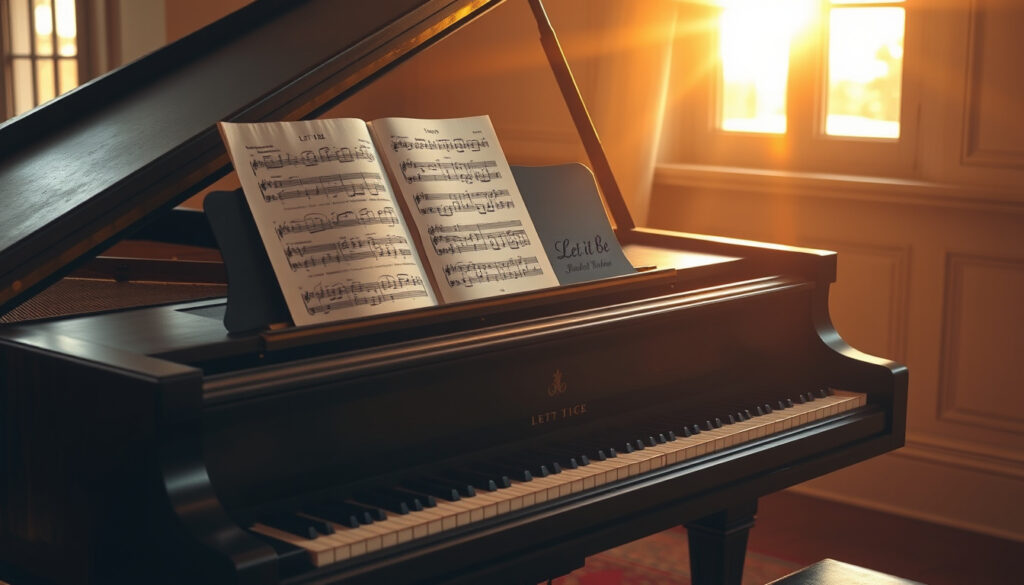
Let It Be – Beatles Song Meaning and History
Paul McCartney’s “Let It Be” has endured for more than five decades as one of The Beatles’ most cherished songs. Written in the shadow of the band’s dissolution, it carries a message of solace and surrender that continues to resonate with listeners worldwide.
Released as the Fab Four’s final single on March 6, 1970, “Let It Be” reached the top of charts in the United States and the United Kingdom. It later became the title track of the group’s last officially issued studio album. Though credited to the Lennon–McCartney partnership, McCartney was the sole creator, drawing from a deeply personal experience that gave the song its emotional weight.
The song emerged during one of the most turbulent periods in the band’s history, when internal tensions were pulling the group apart. Despite the chaos surrounding its creation, “Let It Be” offered something timeless: an invitation to release control and find peace in difficult moments.
What Does “Let It Be” by The Beatles Mean?
McCartney wrote “Let It Be” after experiencing a dream about his mother, Mary Patricia McCartney, who died of cancer in 1956 when he was just fourteen years old. In the dream, she appeared to him during a particularly stressful time for the band and offered words of comfort. McCartney later described the dream as reassurance, a moment of calm amid mounting pressure from management disputes and interpersonal friction within the group.
The opening lyrics of the song reflect this encounter directly. The line “Mother Mary comes to me, speaking words of wisdom, let it be” draws directly from the comfort McCartney received in that vision. His mother reportedly told him, “It will be all right, just let it be,” a phrase that became the song’s central mantra.
The meaning, however, extends beyond the personal. McCartney acknowledged the potential for multiple layers of interpretation. The reference to “Mother Mary” can read as both his own mother and the Virgin Mary, a figure whose fiat—her consent to God’s plan—carries spiritual significance. McCartney, who was raised Catholic, recognized this duality and spoke about the double meaning in interviews.
The song’s early working title was “Brother Malcolm,” referring to road manager Malcolm Evans. Evans claimed the melody came to him during a meditation session in India in 1968. McCartney later downplayed this account, and his own explanation about his mother’s dream remains the most widely cited origin.
Some listeners interpret “Mother Mary” as a reference to Linda Eastman, McCartney’s future wife, who offered him support following the dream. Regardless of which reading listeners favor, the song’s core message remains consistent: acceptance, letting go of control, and finding calm during turmoil.
The Beatles’ Turbulent Final Era
The period surrounding “Let It Be” was defined by escalating tension among the four members. Business disagreements involving manager Allen Klein and the Eastman family estate created friction between McCartney and the others. John Lennon’s relationship with Yoko Ono, creative disagreements, and a general drift apart contributed to an atmosphere that McCartney described as exhausting.
The song itself became a kind of refuge. During sessions marked by arguments and uncertainty, “Let It Be” offered a moment of unity. Its theme of releasing anxiety and embracing peace seemed almost paradoxical given the circumstances of its creation, yet that contrast is part of what gives the song its enduring power.
The Meaning of the Title Phrase
The phrase “let it be” functions as both a directive and a prayer. It invites the listener to stop resisting circumstances beyond their control and to trust that things will resolve. In a broader spiritual sense, the line echoes themes found in various religious traditions, where surrender and patience are presented as paths toward inner peace.
McCartney framed the message in the context of his mother’s comfort, but the lyrics were open enough to speak to anyone navigating difficulty. Lines like “in my hour of darkness, she is standing right in front of me” suggest presence and protection, while “there will be an answer, let it be” offers a message of eventual resolution and hope.
The opening verse can be read as a literal dream recollection or as a spiritual metaphor. McCartney has confirmed that both interpretations hold meaning for him, citing his Catholic upbringing as an influence on how he processes the imagery of “Mother Mary.”
The History and Recording of “Let It Be”
McCartney first developed the melody for “Let It Be” on September 19, 1968, during sessions for the White Album. At that stage, the song was rough and went by the working title “Brother Malcolm.” The earliest publicly documented performance came during the Get Back sessions in January 1969, which were filmed for what would become the documentary Let It Be.
The band returned to the song multiple times during those sessions, playing it in various configurations as the cameras captured the creative process. By January 28, 1969, a fuller recording of the song had been completed at Apple Studios in London. Three days later, on January 30, The Beatles performed “Let It Be” live on the rooftop of their Apple Records headquarters at 3 Savile Row, in what would become their final public performance as a group.
The rooftop concert captured the song at its most raw, with McCartney on piano and the full band performing in the open air. That version, and the footage surrounding it, would later be featured prominently in both the 1970 film and the 2021 Disney+ docuseries The Beatles: Get Back directed by Peter Jackson.
Two Versions, Two Producers
When the single version was prepared for release in March 1970, George Martin produced it. This version featured a gentler guitar solo and a lower orchestral presence compared to the album version. McCartney reportedly preferred this more restrained approach.
The album version, released in May 1970, was produced by Phil Spector, who added his signature Wall of Sound treatment. Spector’s mix included a more prominent orchestral arrangement and an extended guitar solo. This version proved controversial, with some critics and fans feeling the production overpowered the song’s simplicity. McCartney later expressed mixed feelings about Spector’s contributions.
Key Recording Dates
- September 19, 1968 — First rehearsal during White Album sessions at Abbey Road
- January 3, 1969 — First documented performance during Get Back sessions
- January 28, 1969 — Full recording at Apple Studios
- January 30, 1969 — Rooftop performance on Savile Row
- April 1, 1970 — Single version produced by George Martin
- March–April 1970 — Album version produced by Phil Spector
Despite being released after Abbey Road, Let It Be was recorded before it. The sessions that produced “Let It Be” spanned late 1968 and early 1969, making it one of the oldest songs in the band’s catalog at the time of release.
“Let It Be” Lyrics and Key Lines
The lyrics of “Let It Be” are among the most quoted in popular music history. McCartney’s language is simple and direct, yet the words carry emotional depth that has made the song a staple at memorials, celebrations, and moments of reflection around the world.
Opening Verse
The song begins with a confession of vulnerability: “When I find myself in times of trouble, Mother Mary comes to me, speaking words of wisdom, let it be.” This sets the tone for the entire piece. The speaker acknowledges distress and then describes a source of comfort, turning immediately to the mantra that gives the song its title.
The second half of the verse reinforces the presence of that comfort: “And in my hour of darkness, she is standing right in front of me, speaking words of wisdom, let it be.” The repetition of the phrase underscores its importance, serving as both reassurance and instruction.
Bridge Section
The bridge shifts focus from the personal to the universal: “And when the broken-hearted people living in the world agree, there will be an answer, let it be.” Here, the song moves beyond McCartney’s individual experience to speak to anyone who is suffering. The mention of “broken-hearted people” echoes the emotional state of the band during the sessions while also suggesting a broader human condition.
“For though they may be parted, there is still a chance that they will see, there will be an answer, let it be” offers a note of hope and reconciliation. Even in separation, the lyric suggests, there remains potential for healing and reconnection.
Song Structure and Chords
“Let It Be” is played in the key of C major and features a straightforward chord progression that reflects its piano-driven arrangement. The verse follows a C–G–Am–F pattern, repeated throughout the section. The chorus moves through C–G–F–C, with a bridge variation using F–Em–Dm–C before returning to the closing progression.
McCartney performed the primary piano part, with contributions from Billy Preston on electric piano during the rooftop performance. The song’s arrangement is minimal by design, allowing the melody and lyrics to carry the emotional weight.
Release Details: Album and Date
The single version of “Let It Be” was released on March 6, 1970, in both the United Kingdom and the United States. It was The Beatles’ final single before McCartney publicly announced his departure from the group on April 10, 1970. The B-side featured “You Know My Name (Look Up the Number),” a track originally written by Lennon but revisited and completed by McCartney.
The album Let It Be followed on May 8, 1970, in the United Kingdom and May 18 in the United States. The title track appeared in Phil Spector’s production, which differed noticeably from the single mix. Although it was released last, the album was recorded before Abbey Road.
Chart Performance
“Let It Be” reached number one on the Billboard Hot 100 in the United States on April 11, 1970, and held that position for two consecutive weeks. In the United Kingdom, it also reached number one, remaining on top for two weeks. The song charted at number one in several other countries, including Australia and Ireland.
The track has sold more than ten million copies worldwide, earning multiple certifications. Its commercial success came at a time of profound upheaval within the band, making its reception particularly notable.
The single version, produced by George Martin, has a more understated arrangement. The album version, produced by Phil Spector, includes heavier orchestration and an extended guitar solo. Both versions remain popular, and listeners often have strong preferences between them.
The “Let It Be” Movie and Documentary
The documentary Let It Be premiered on May 13, 1970, directed by Michael Lindsay-Hogg. It chronicles the Get Back sessions and captures the band working through tensions while preparing new material. The film includes the rooftop performance and various candid moments that reveal the strain within the group.
The film was not released on home video for decades, making it one of the harder-to-find Beatles documentaries for many years. Its absence from home media only increased its mystique among fans and collectors.
In 2021, Peter Jackson directed The Beatles: Get Back, a three-part docuseries released on Disney+. This series drew from over sixty hours of previously unused footage from the original sessions, offering a more comprehensive view of what took place. Jackson’s edit presented a different narrative than the 1970 film, showing more collaboration and warmth between the members. The rooftop performance featured prominently in the series as its emotional climax.
What the Films Reveal About the Sessions
Both projects document the creative process behind songs including “Let It Be,” “Get Back,” “The One After 909,” and others. Viewers can watch the band work through arrangements, debate choices, and navigate interpersonal friction in real time. The contrast between the two releases highlights how editing choices shape narrative.
The 1970 film emphasized the band’s fractures, while Jackson’s series offered a more nuanced portrait that acknowledged tensions but also showed moments of genuine musical connection. Both remain valuable records of a pivotal period in popular music history.
Timeline of “Let It Be”
The journey of “Let It Be” from concept to released single spans nearly two years and moves across several phases of The Beatles’ career.
- September 19, 1968 — Melody first explored during White Album sessions at Abbey Road, under the title “Brother Malcolm”
- January 3, 1969 — Song performed for the first time during Get Back sessions, filmed for documentary
- January 28, 1969 — Full studio recording completed at Apple Studios
- January 30, 1969 — Rooftop concert performance on Savile Row, The Beatles’ final live show
- April 1, 1970 — George Martin-produced single version finalized for release
- March 6, 1970 — Single released in the UK and US, becoming The Beatles’ final single
- May 8, 1970 — Let It Be album released with Phil Spector’s production
- May 13, 1970 — Documentary film Let It Be premieres in theaters
Each milestone in this sequence reflects both the song’s development and the broader context of a band approaching its end. The fact that “Let It Be” emerged from such turmoil and still achieved chart dominance adds to its legendary status.
What We Know and What Remains Unclear
Many details about “Let It Be” are well documented. McCartney has spoken publicly about the dream that inspired the song, and the timeline of its recording is supported by multiple sources including archival footage, contemporaneous interviews, and official band histories.
Some aspects remain debated or uncertain. The precise degree to which the band’s tensions influenced the lyrics is open to interpretation. While McCartney has acknowledged that the song offered him personal comfort, the extent to which each member of the group related to its message varies.
Established Information
- Paul McCartney wrote and performed the song
- The inspiration came from a dream about his mother, Mary Patricia McCartney
- Initial recording occurred during the Get Back sessions in January 1969
- The rooftop performance on January 30, 1969, marked the band’s last live concert
- The single was released on March 6, 1970, and reached #1 in multiple countries
- The song was included in the 1970 documentary and later featured in the 2021 Disney+ series
Unresolved Questions
- The exact level of influence from each band member’s emotional state during the sessions
- Whether the reference to “Mother Mary” was always intended as a spiritual double meaning
- The precise degree to which Malcolm Evans’s account of the song’s origin reflects reality
Cultural Context and Legacy
“Let It Be” arrived at a moment of transition for The Beatles and for popular music more broadly. The band was fracturing, and the industry itself was shifting. Yet the song’s message of acceptance and calm resonated far beyond the circumstances of its creation.
In the years following its release, “Let It Be” has been covered by countless artists and featured in films, television shows, and public events. Its use at memorial services and moments of collective grief reflects the universal quality of its lyrics. McCartney himself played the song at the memorial service for his late wife Linda, deepening its personal significance.
The song has also been analyzed through religious and philosophical lenses, with commentators noting its resonance with concepts of surrender found in Christianity, Buddhism, and other traditions. Whether or not McCartney intended such readings, the song’s openness to interpretation is part of its enduring appeal.
Its status as the final single before the breakup gives it an added weight. Listeners hearing the song for the first time or revisiting it decades later encounter not just a piece of music but a document of a specific cultural moment—a band at the edge of dissolution, choosing to record something about peace.
“When I find myself in times of trouble, Mother Mary comes to me, speaking words of wisdom, let it be.”
— “Let It Be” lyrics
It will be all right, just let it be.
— Words reportedly spoken to Paul McCartney in a dream by his late mother
Summary
“Let It Be” stands as one of the defining songs in The Beatles’ catalog and in the broader history of popular music. Written and performed by Paul McCartney, it draws from a deeply personal dream while speaking to universal themes of comfort, acceptance, and hope during difficult times. Its recording during the band’s final era gave it additional weight, and its chart success proved that even amid turbulence, the group’s appeal remained strong.
The song exists in multiple forms—the single mix produced by George Martin and the album version produced by Phil Spector—each with distinct characteristics. It appears in both the 1970 documentary and the 2021 Disney+ docuseries The Beatles: Get Back, continuing to reach new audiences more than five decades after its release.
For those exploring the song further, the Springsteen Deliver Me From Nowhere resource offers additional context on how other artists approach legacy and memory in their work.
Frequently Asked Questions
What does “Let It Be” mean?
The song centers on acceptance and release during times of difficulty. Paul McCartney wrote it after a dream about his mother offering comfort during a stressful period for the band.
Who is Mother Mary in “Let It Be”?
Mother Mary refers to Paul McCartney’s mother, Mary Patricia McCartney, who died in 1956. Some listeners and commentators also note spiritual resonances with the Virgin Mary.
Why is “Let It Be” considered The Beatles’ last song?
It was released as the band’s final single on March 6, 1970, before Paul McCartney publicly announced his departure from the group on April 10, 1970.
What album is “Let It Be” on?
It is the title track of Let It Be, The Beatles’ twelfth and final studio album, released in May 1970.
When was “Let It Be” first recorded?
The earliest documented rehearsal occurred on September 19, 1968, during White Album sessions. The well-known studio and rooftop versions were recorded in January 1969.
Did Paul McCartney write “Let It Be” alone?
Yes. Although credited to the Lennon–McCartney partnership, Paul McCartney was the sole writer and primary performer of “Let It Be.”
What is the difference between the single and album versions?
The single version, produced by George Martin, is more restrained with a softer guitar solo and minimal orchestration. The album version, produced by Phil Spector, features a heavier arrangement with more prominent orchestration.
Additional Questions
Why did The Beatles perform “Let It Be” on the rooftop?
The rooftop performance on January 30, 1969, was part of the filmed Get Back sessions. It became their final live performance as a group.
What is the “Let It Be” movie about?
The 1970 documentary, directed by Michael Lindsay-Hogg, captures the Get Back sessions, showing the band working through tensions while recording new material, including “Let It Be.”
How did “Let It Be” perform on the charts?
It reached #1 on the Billboard Hot 100 in the United States on April 11, 1970, and #1 in the United Kingdom. It has sold over ten million copies worldwide.
More related posts
 Keli Lane Case: Latest News and Unanswered Questions
 Aaron Woods: NRL Career, Retirement, and Slater Controversy
 Richard Madden: Career, Relationships, and Biography
 Manuel Garcia-Rulfo: Lincoln Lawyer, Dating & Next Projects
 Eve Jobs: The Heiress Who Didn’t Inherit – Net Worth & Wedding
 Chronic Kidney Disease: Symptoms, Causes, Stages, Life Expectancy
 Cash for Cans – Rates, States and Redemption Guide
 Hai Ha Transfer: Fees, Safety, Countries & Review