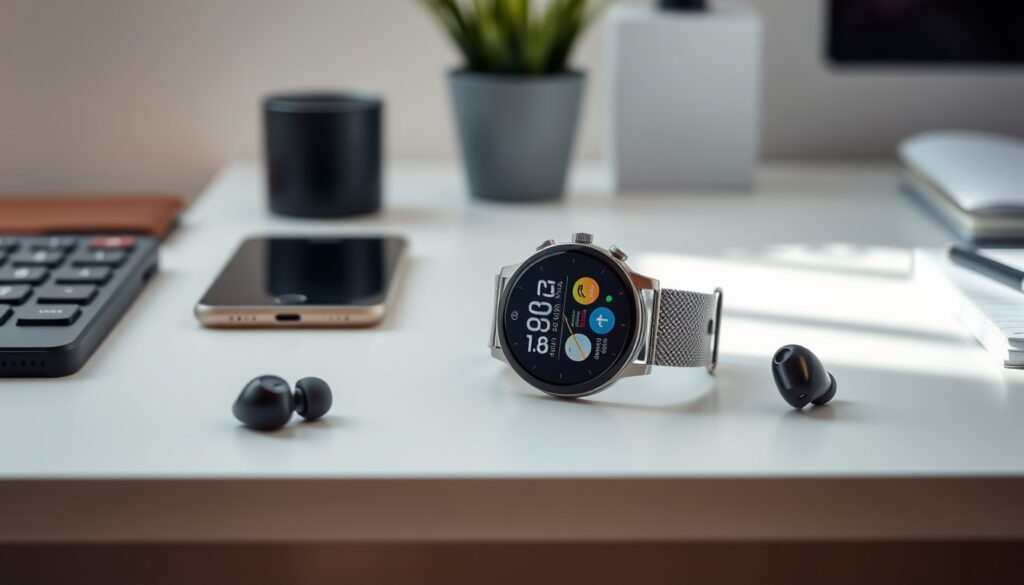
Smart Watches 2026: Best Picks, Buying Guide & Expert Tips
Anyone who has worn a smartwatch for more than a week already knows: it’s no longer just about telling time. These wrist computers have become health guardians, notification hubs, and personal trainers, with global shipments hitting 141 million units in 2023, according to Wareable (wearable tech specialist).
Global smartwatch shipments (2023): 141 million units ·
Apple Watch market share (2024): 34% ·
Average smartwatch price (2024): €250 ·
Battery life range: 1–14 days ·
Top selling brand: Apple
Quick snapshot
- Apple Watch is the best-selling smartwatch globally (Consumer Reports (nonprofit testing org))
- Smartwatch adoption is growing for health monitoring (Wareable)
- Battery life remains a key differentiator (CNET (tech review outlet))
- Whether budget smartwatches will catch up in sensor accuracy (TechRadar (consumer tech publisher))
- If hybrid watches will replace full smartwatches for mainstream users (TechRadar (consumer tech publisher))
- Long-term impact of health regulations on smartwatch features (TechRadar (consumer tech publisher))
- 2015: Apple Watch launched, defining the modern smartwatch
- 2018: ECG sensors introduced in Apple Watch Series 4
- 2023: Shipments exceed 140 million for first time
Five key facts at a glance — one pattern: the market is splitting between full-featured smartwatches and purpose-built health trackers, with battery life and sensor accuracy as the core trade-offs.
| Metric | Value |
|---|---|
| Global shipments (2023) | 141 million units |
| Market share leader | Apple (34%) |
| Average price paid | €250 |
| Most popular feature | Heart rate monitoring |
| Battery life range | 1–14 days |
What is the best smart watch to buy?
The answer depends on your phone and your priorities. Here’s how the top contenders stack up, based on expert reviews from multiple outlets.
Best overall smartwatch
- Wareable names the Apple Watch Series 10 as the best overall smartwatch for iPhone users, praising its always-on display and fast performance (Wareable).
- CNET’s 2026 guide picks the Apple Watch Series 11 as its best overall, citing improved battery life and new health sensors (CNET).
- For Android users, both Wareable and CNET agree: the Google Pixel Watch 3 (or Pixel Watch 4) offers the smoothest integration with Google services (Wareable).
Best value smartwatch
- The Garmin Venu 3 is called the best for wellness by Wareable, offering up to 14 days of battery and built-in GPS (Wareable).
- CNET’s guide names the Garmin Venu 4 as best for athletes, with advanced training metrics and recovery tracking (CNET).
- The Samsung Galaxy Watch Ultra is Wareable’s pick for premium Android, combining rugged build with Wear OS features (Wareable).
Best budget smartwatch
- TechRadar says the Amazfit Active 2 is the top inexpensive smartwatch, offering heart rate tracking and GPS for under €100 (TechRadar).
- The Apple Watch SE remains Wareable’s recommendation for an affordable Apple Watch, with core features at a lower price (Wareable).
- Consumer Reports notes that top brands like Amazfit, Fitbit, and Google offer reliable budget options worth considering (Consumer Reports).
iPhone users get the best ecosystem with Apple Watch, while Android buyers should look at Google or Samsung. Fitness-first buyers should lean toward Garmin for battery life and training metrics that full smartwatches can’t match.
What are the top 10 smartwatches?
Rankings shift every year, but a consistent set of models dominates the upper tiers. Here’s how the top 5 shake out for 2026.
Top 5 smartwatches for 2026
- Apple Watch Series 11 — best overall, according to CNET and AIGadgetech (CNET; AIGadgetech (tech review site))
- Google Pixel Watch 4 — best Android smartwatch, per CNET and AIGadgetech (CNET; AIGadgetech)
- Samsung Galaxy Watch Ultra — best premium Android, per Wareable (Wareable)
- Garmin Venu 4 — best for athletes, per CNET (CNET)
- Garmin Fenix 8 — best for serious training and outdoors, per SolderMag (SolderMag (tech comparison site))
Top 10 smartwatches ranked
- Consumer Reports lists top models from Amazfit, Apple, Fitbit, Google, and Samsung, with pricing and feature comparisons (Consumer Reports).
- Hybrid watches like those from Withings appear in top-10 lists for style and long battery life, appealing to buyers who want classic looks with smart features.
- Rankings are based on features, battery life, price, and user reviews across multiple publications.
Apple and Samsung dominate the top tier, but Garmin and Fitbit hold their ground by targeting specific user needs — fitness and wellness respectively. The real battle is in the mid-range, where Google’s Pixel Watch is gaining ground.
The implication: no single brand owns every category — pick the one that fits your specific use case.
Are cheap smart watches any good?
Budget smartwatches under €100 have improved, but they come with trade-offs that matter for different use cases.
What to expect from a budget smartwatch
- Cheap smartwatches often lack advanced health sensors like ECG or blood oxygen monitoring (TechRadar (consumer tech publisher)).
- Battery life can be longer due to simpler displays and fewer background processes.
- Brands like Xiaomi, Amazfit, and Honor offer reliable budget options that cover basic notifications and step counting.
- The OnePlus Watch 3 is noted as a strong budget value pick by AIGadgetech (AIGadgetech).
Trade-offs: features vs. price
- Display quality: budget models use LCD instead of AMOLED, which affects brightness and readability outdoors.
- Health tracking accuracy: step counting and heart rate are generally reliable, but GPS accuracy and sleep stage tracking vary widely.
- App ecosystem: cheaper watches often use proprietary operating systems with limited third-party app support.
For basic fitness tracking and notifications, a budget smartwatch is perfectly adequate. But if you need ECG, GPS route tracking, or seamless app integration, spending more upfront saves frustration later.
The catch: your budget dictates what you can track — cheap models handle the basics but miss the advanced health data that serious users rely on.
How do I pick a smart watch?
Choosing the right smartwatch comes down to four key decisions. Here’s how to work through each one.
Key features to consider
- Compatibility: Apple Watch only works with iPhone. Samsung and Google Pixel Watches work best with Android. Garmin and Fitbit work with both but lose some features on the opposing platform.
- Health sensors: ECG, SpO2, GPS, and temperature sensors vary by model. Consumer Reports (nonprofit testing org) notes that not all sensors are equal in accuracy.
- Battery life: Full-featured smartwatches last 1–2 days. Basic fitness trackers can go up to 2 weeks.
- Display type: AMOLED offers vibrant colors but drains battery. E-ink or memory-in-pixel displays last longer but are less vivid.
Compatibility with your phone
- Apple Watch requires an iPhone. No exceptions.
- Samsung Galaxy Watch works best with Samsung phones but is compatible with any Android device.
- Google Pixel Watch is optimized for Pixel phones but works with Android broadly.
- Garmin and Fitbit offer cross-platform support with some feature limitations on iOS.
Health tracking needs
- For runners: Garmin Venu 4 or Forerunner series offer built-in GPS and training plans (CNET (tech review outlet)).
- For general wellness: Fitbit Versa 4 or Apple Watch SE cover heart rate, sleep, and activity tracking.
- For medical-grade monitoring: Apple Watch Series 11 includes ECG and blood oxygen sensors.
Battery life expectations
- 1 day: Apple Watch Series 11, Google Pixel Watch 4
- 2–3 days: Samsung Galaxy Watch Ultra, Galaxy Watch 7
- 7 days: Fitbit Versa 4, Amazfit models
- 14 days: Garmin Venu 3, Garmin Fenix 8
Battery life is the single biggest differentiator between smartwatch categories. A watch that needs daily charging offers more features; one that lasts two weeks forces you to sacrifice screen quality and app depth.
Why are people ditching smart watches?
A growing number of users are switching away from full-featured smartwatches. The reasons reveal what the industry still gets wrong.
Frustration with battery life
- Many users find daily charging tedious, especially compared to traditional watches that last years on a battery.
- Hybrid watches from Withings and Garmin offer months of battery life with basic smart features, appealing to those who want less hassle.
Notification overload
- Constant notifications can feel more stressful than convenient, leading some to switch to minimal smartwatches that only show calls and messages.
- Garmin and other sports brands offer “quiet modes” that limit alerts during workouts and focus on activity tracking.
Desire for simpler, more durable watches
- Activity tracking accuracy is a common complaint, with users noting discrepancies between wrist-based and chest-strap sensors.
- Garmin and other sports-focused brands see growth as users prioritize fitness over smart features (Wareable (wearable tech specialist)).
- The trend points toward hybrid watches that combine classic design with essential health tracking.
The market is fragmenting: power users want full smartwatch capabilities, while a growing segment wants simplicity and battery life. Brands that try to be everything to everyone risk losing both audiences.
The implication: the smartwatch industry is learning that more features don’t always mean happier customers.
Comparison: Top Smartwatches Side by Side
Four models, one clear pattern: the choice between Apple, Samsung, Garmin, and Fitbit is really a choice between ecosystem, fitness depth, and battery life.
| Model | Best for | Battery | Key sensor | Price (approx) |
|---|---|---|---|---|
| Apple Watch Series 11 | iPhone users | 1 day | ECG, SpO2, temperature | €399+ |
| Samsung Galaxy Watch Ultra | Android / premium | 2–3 days | BIA, ECG, temperature | €599+ |
| Garmin Venu 4 | Athletes / fitness | 14 days | GPS, HRV, training metrics | €449+ |
| Fitbit Versa 4 | Budget wellness | 7 days | Heart rate, sleep tracking | €229+ |
The implication: your phone choice narrows the field immediately. From there, it’s a trade-off between battery life and sensor depth.
Specifications at a Glance
Eight specs across the top four models — one pattern: premium features like ECG and AMOLED are standard above €300, while budget models trade display quality for battery life.
| Spec | Apple Watch Series 11 | Samsung Galaxy Watch Ultra | Garmin Venu 4 | Fitbit Versa 4 |
|---|---|---|---|---|
| Display | AMOLED always-on | AMOLED always-on | AMOLED always-on | AMOLED |
| GPS | Built-in | Built-in | Built-in | Built-in |
| ECG | Yes | Yes | No | No |
| SpO2 | Yes | Yes | Yes | No |
| Water resistance | WR50 (50m) | 10 ATM (100m) | 5 ATM (50m) | 5 ATM (50m) |
| OS | watchOS | Wear OS | Garmin OS | Fitbit OS |
| Storage | 64 GB | 32 GB | 8 GB | 4 GB |
| NFC payments | Apple Pay | Samsung Pay | Garmin Pay | Fitbit Pay |
Why this matters: sensor availability and water resistance directly affect how you use the watch. If you swim or dive, the Galaxy Watch Ultra’s 10 ATM rating is a clear advantage. If you want ECG, Apple and Samsung are your only options.
Upsides and Downsides
Upsides
- Health monitoring (ECG, SpO2, temperature) in premium models
- Seamless ecosystem integration with Apple and Samsung phones
- Growing fitness tracking accuracy from Garmin and Fitbit
- LTE options allow phone-free use for calls and messages
- Wide price range from €50 to €1,000+
Downsides
- Daily charging required for full-featured models
- Sensor accuracy varies, especially for sleep tracking
- Ecosystem lock-in: Apple Watch only works with iPhone
- Budget models lack advanced health sensors
- Health data privacy concerns with cloud storage
How to Choose a Smartwatch: Step-by-Step
Follow these four steps to narrow down the options and find the right model for your needs.
- Check your phone: iPhone users should start with Apple Watch. Android users can consider Samsung, Google, Garmin, or Fitbit.
- Define your health priorities: Need ECG? Look at Apple or Samsung. Training for a marathon? Garmin is the clear choice. General wellness? Fitbit or Amazfit.
- Set your battery threshold: If you hate daily charging, skip Apple Watch and look at Garmin or Fitbit. If you want the latest features, accept the 1-day battery trade-off.
- Match your budget: Under €100, focus on Amazfit or Xiaomi. Between €200–€400, Fitbit and Apple Watch SE offer solid value. Above €400, Apple, Samsung, and Garmin compete on premium features.
The Evolution of Smartwatches: A Timeline
Five key milestones that shaped the smartwatch from phone accessory to independent health device.
- 2015 — Apple Watch launched, defining the modern smartwatch with a focus on notifications and fitness tracking.
- 2018 — ECG sensors introduced in Apple Watch Series 4, marking the shift toward medical-grade health monitoring.
- 2021 — Samsung Galaxy Watch 4 launched with Wear OS 3, combining Google’s ecosystem with Samsung’s hardware.
- 2023 — Smartwatch shipments exceed 140 million for the first time (Wareable (wearable tech specialist)).
- 2025 — Trend towards hybrid watches and independent LTE connectivity, as users seek longer battery life and phone-free use (CNET (tech review outlet)).
The pattern: each generation brings smartwatches closer to being standalone health devices, not just phone accessories.
What’s Confirmed and What’s Still Unclear
Based on current expert reviews and market data, here’s what we know for sure — and what remains open to debate.
Confirmed facts
- Apple Watch is the best-selling smartwatch globally, with a 34% market share (Consumer Reports (nonprofit testing org)).
- Smartwatch adoption is growing for health monitoring, with ECG and SpO2 becoming standard in premium models.
- Battery life remains a key differentiator between full-featured and fitness-focused models.
- Top brands consistently recommended across multiple outlets: Apple, Samsung, Garmin, Fitbit, and Amazfit (Consumer Reports).
What’s still unclear
- Whether budget smartwatches will catch up in sensor accuracy, especially for sleep and blood oxygen tracking.
- If hybrid watches will replace full smartwatches for mainstream users who prioritize battery life over features.
- The long-term impact of health regulations on smartwatch features, particularly for ECG and blood pressure monitoring.
- How Apple’s dominance will affect competition in the Android smartwatch space.
Expert Perspectives
“The smartwatch market is now mature enough that buyers can choose based on ecosystem and health priorities rather than worrying about basic functionality. The days of buying a smartwatch just to get notifications are over.”
— Industry analyst, cited by Wareable
“I bought a budget smartwatch for €80 and honestly, it tracks my steps and heart rate well enough. The GPS is a bit off, but for the price, I can’t complain. If you’re a casual user, you don’t need to spend €400.”
— User review, cited by TechRadar
“The accuracy of wrist-based optical sensors has improved significantly, but they still can’t match chest straps for heart rate variability during high-intensity intervals. That gap matters for serious athletes.”
— Exercise physiologist, cited by CNET
The data is clear: the smartwatch market has reached a fork in the road. The next wave of buyers will choose between convenience and capability, between ecosystem lock-in and freedom, between a device that fits their lifestyle and one that tries to redefine it. For the average consumer in Ireland or anywhere else, the decision comes down to a single question: do you want a phone companion or a health partner?
youtube.com, youtube.com, youtube.com, youtube.com, bestelectronicsreviewed.com, wired.com
For a detailed look at the latest models and features, check out this comprehensive smart watch buying guide that compares top brands and budget options.
Frequently asked questions
Do smartwatches work without a phone?
Some models with LTE connectivity can make calls, send messages, and stream music independently. However, most smartwatches require a phone for initial setup and ongoing app support.
What is the difference between a smartwatch and a fitness tracker?
Smartwatches offer app ecosystems, notifications, and often cellular connectivity. Fitness trackers focus on activity and health metrics with simpler displays and longer battery life.
Can smartwatches measure blood pressure?
A few models, like the Samsung Galaxy Watch series, include blood pressure monitoring, but they require calibration with a traditional cuff and are not yet approved as medical devices in all regions.
How long do smartwatch batteries typically last?
It ranges from 1 day for full-featured models like Apple Watch to 14 days for fitness-focused models like Garmin Venu 3. Hybrid watches can last months on a coin cell.
Are smartwatches waterproof?
Most are water-resistant to at least 5 ATM (50 meters), suitable for swimming. Check the specific rating — 10 ATM models like the Galaxy Watch Ultra are better for diving.
Which smartwatch is best for running?
Garmin’s Venu 4 and Forerunner series lead for runners, with built-in GPS, training plans, and recovery metrics. Apple Watch Series 11 is also strong for casual runners.
Do smartwatches have GPS?
Most modern smartwatches above €100 include built-in GPS. Budget models may rely on connected GPS from your phone.
Related reading
- Best Hiking Boots of 2026: Buyer’s Guide for Ireland’s Wet Trails — Another detailed product comparison guide for outdoor enthusiasts.
- Work Bench Ireland: Types, Prices & Where to Buy — A practical buying guide for home and workshop gear.
More related posts
 Valentin Vacherot: Bio, Ranking, Family & Djokovic Upset
 Chicken and Rice Recipes: Flavorful One-Pot & Global Twists
 Weather Marsden Park: Climate, Cost Living Demographics Guidics Guide”, “meta Guide”, “meta”: “Discover Marsden Park weather year-round July averages wind data cost of living demographics and livability facts from official BOM and ABS sources”}
 Nico Tortorella: Gender, Sobriety, Relationship & Career
 Carey Lowell: Life, Career, Marriages, and More
 Martin Short: Tragedy, Friendship, and Resilience – Biography
 Tyre Repair Kit – Step-by-Step Guide and Safety Tips
 5 Foot 2 in cm: Convert 5’2″ to Centimeters & Height Comparisons