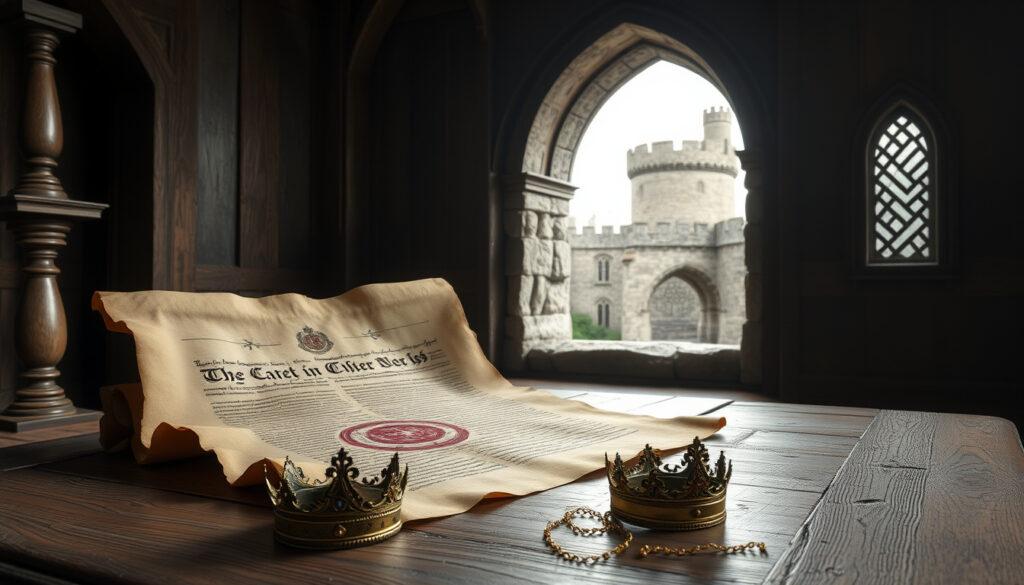
John Lackland: The King Behind the Nickname and His Legacy
King John of England is a name that tends to bring two things to mind: the Magna Carta and a reputation as one of the worst monarchs in British history. But behind the nickname “Lackland” lies a story of lost territory, feudal conflict, and a legacy that still sparks curiosity — from constitutional scholars to genealogy enthusiasts tracing presidential roots. This article separates historical fact from modern speculation, covering everything from his reign to the disputed claims that link him to U.S. presidents.
Reign: 1199–1216 ·
Nickname origin: Lost French lands ·
Legacy: Forced Magna Carta (1215) ·
Death: Dysentery, October 1216 ·
Modern interest: Presidential ancestry claims
Quick snapshot
- Reigned 1199–1216 (Encyclopaedia Britannica)
- Nicknamed Lackland for lost French lands (The Royal Family)
- Signed Magna Carta (The Royal Family)
- Seen as a tyrant (World History Encyclopedia)
- Modern historians note some reforms (Encyclopaedia Britannica)
- Victorian-era “Bad King John” label (World History Encyclopedia)
Six key facts about John Lackland, from birth to his signature act.
| Label | Value |
|---|---|
| Full name | John of England |
| Born | 24 December 1166 (or 1167) |
| Died | 18–19 October 1216, Newark |
| Spouse | Isabella of Angoulême |
| Children | Henry III, Richard of Cornwall, Joan, Isabella, Eleanor |
| Signature act | Magna Carta (1215) |
Why is King John called John Lackland?
Origin of the nickname Lackland
- John was nicknamed “Lackland” because as the youngest son of Henry II he inherited no land in France (The Royal Family).
- The epithet Jean sans Terre dates from his childhood (Intriguing History).
John’s nickname stuck because it was true — his father gave him nothing, and later he lost even more. The irony is that the label originally described landlessness, but it came to define his entire reign.
The loss of French territories
- John lost Normandy and most of the Angevin lands in France during conflict with Philip II (Encyclopaedia Britannica).
- By 1204, the loss was complete, cementing his nickname (Encyclopaedia Britannica).
The implication: John’s lack of land defined his reign’s failure, but it also forced him to confront the barons — a confrontation that led to Magna Carta.
What was John Lackland known for?
His reign and the Magna Carta
- He was forced to sign the Magna Carta in 1215 (The Royal Family).
- The charter limited royal powers and defined feudal obligations (The Royal Family).
- Magna Carta is regarded as a foundation for English constitutional history (BBC News).
Conflicts with barons and France
- His reign ended with civil war (BBC News).
- John’s political failures included loss of territory in France and conflict with the English barons (Encyclopaedia Britannica).
John’s inability to manage both foreign and domestic fronts created a crisis that made Magna Carta possible — a document that would outlive his own failed reign by centuries.
Was John a good or bad king?
Contemporary opinions
- Medieval chronicler Matthew Paris described John as “a tyrant rather than a king” (World History Encyclopedia).
- Medieval chroniclers portrayed him as cruel and greedy (World History Encyclopedia).
Modern historical assessment
- Historian David Carpenter noted John’s administrative competence despite failures (Encyclopaedia Britannica).
- Modern historians note administrative reforms but poor leadership (Encyclopaedia Britannica).
- The nickname “Bad King John” dates from the later Victorian era (World History Encyclopedia).
The pattern: John’s administrative innovations were real, but his personal failures — cruelty, greed, and military incompetence — overwhelmed them in the historical record.
Three aspects of John’s reign compared with his predecessor Richard I.
| Aspect | John Lackland (1199–1216) | Richard I (1189–1199) |
|---|---|---|
| Territorial control | Lost Normandy and most French lands (Encyclopaedia Britannica) | Retained most Angevin holdings (Encyclopaedia Britannica) |
| Relationship with barons | Revolted, forcing Magna Carta (The Royal Family) | Generally stable, few domestic conflicts |
| Legacy in history | “Bad King John,” but constitutional milestone (BBC News) | “Lionheart,” military hero but absent king |
The trade-off: John’s failures produced a constitutional document that Richard’s military successes never did.
Was Obama related to John Lackland?
Genealogical claims
- Some genealogies connect Obama to John Lackland through his mother’s ancestry (Reddit).
- A popular claim says all U.S. presidents except one share King John as an ancestor (Facebook).
Evidence and skepticism
- The link is disputed and not proven by mainstream historians.
- Obama’s Irish ancestry is documented, but the connection to John Lackland remains unsubstantiated.
Genealogical claims about medieval ancestry often rely on incomplete records and speculative leaps. The Obama–Lackland link is a classic example of a story that sounds good but lacks rigorous evidence.
Is Donald Trump related to John Lackland?
Trump’s documented genealogy
- Trump’s ancestry includes German and Scottish immigrants.
- Claims linking him to John Lackland lack credible evidence (Facebook).
Claims of medieval lineage
- No authoritative source supports a direct descent from John.
The catch: Presidential ancestry claims, while fascinating, are often built on shaky foundations. The absence of reliable records makes any connection to a 13th-century king speculative at best.
Which king died of diarrhea?
Cause of death of John Lackland
- John died of dysentery (often described as “diarrhea”) in October 1216 (BBC News).
- The death occurred in Newark, Nottinghamshire (Encyclopaedia Britannica).
Medical understanding of dysentery
- Dysentery, a bacterial infection of the intestines, was common in medieval camps and could kill quickly.
John’s death from dysentery during civil war was inglorious, but it ended a reign that had already collapsed. His nine-year-old son Henry III succeeded him, and the kingdom steadied.
Timeline signal
- 1166/1167 – Birth of John, youngest son of Henry II (Encyclopaedia Britannica)
- 1189 – Richard I becomes king; John receives lands in Ireland
- 1199 – John crowned king after Richard’s death (The Royal Family)
- 1204 – Loss of Normandy and most French possessions (Encyclopaedia Britannica)
- 1215 – Barons force John to sign Magna Carta (The Royal Family)
- 1216 – Civil war; John dies of dysentery in October (BBC News)
Confirmed facts vs. what’s unclear
Confirmed facts
- John died of dysentery (BBC News)
- He lost Normandy in 1204 (Encyclopaedia Britannica)
- The Magna Carta was sealed in 1215 (The Royal Family)
- His nickname “Lackland” refers to lost French territories (The Royal Family)
What’s unclear
- Whether Obama or Trump are directly descended from John
- Exact nature of John’s relationship with his wife Isabella
- How much John’s reputation was shaped by later propaganda
Quotes on John Lackland
“He was a tyrant rather than a king.”
— Medieval chronicler Matthew Paris, World History Encyclopedia
“John was an able administrator, but his personal failings and military disasters made him the worst king of England.”
— Historian David Carpenter, Encyclopaedia Britannica
“John is often called the worst king in English history.”
— Common aphorism, World History Encyclopedia
John Lackland’s story is a paradox: a king who lost almost everything yet gave England one of its most enduring documents. For modern readers, the fascination with his presidential ancestry shows how medieval history still resonates. The implication for anyone tracing family roots: treat every claim that jumps from the 13th century to the 21st with healthy skepticism. For genealogy enthusiasts, the choice is clear: rely on documented records, or risk chasing a legend that — like John’s French lands — may never have been there.
en.wikipedia.org, britroyals.com, theminiaturehistorian.wordpress.com, newyorker.com, youtube.com
For a deeper look at the territorial losses that earned him his epithet, see a detailed analysis of John Lacklands reign and nickname and how it shaped his controversial legacy.
Frequently asked questions
Was John Lackland a good ruler?
No, he is widely regarded as a failed king. His reign was marked by military losses, conflict with the barons, and a reputation for cruelty. However, his administrative reforms were noted by some historians.
How did John Lackland lose his lands?
He lost Normandy and most of the Angevin territories in France through military defeats to King Philip II of France by 1204.
Did John Lackland sign the Magna Carta willingly?
No, he was forced to seal it by rebel barons in June 1215 at Runnymede. He soon sought to annul it, leading to civil war.
What were John Lackland’s relations with the Church?
John quarreled with Pope Innocent III over the appointment of the Archbishop of Canterbury, leading to England being placed under interdict and John’s excommunication. He later reconciled and became a papal vassal.
How did John Lackland die?
He died of dysentery in October 1216 at Newark Castle, during the civil war against the barons.
Is John Lackland a villain in modern media?
Yes, he is often portrayed as a villain in films, novels, and games. He appears as a servant in the mobile game Fate/Grand Order, reflecting his enduring cultural presence.
What is Fate/Grand Order’s John Lackland like?
In Fate/Grand Order, John is depicted as a Berserker-class servant, embodying his reputation as a tyrant. The character draws on his historical nickname and negative legacy.
Related reading
More related posts
 Andrew Hastie: Biography, Controversies and Beliefs
 Melbourne Victory FC: History, Rivals and Grand Final Wins
 Josh O’Connor: Biography, Partner, Ethnicity, and FAQs
 Yasser Arafat: Recognition, Nobel Peace Prize, and Legacy
 Now You See Me: Now You Don’t (2025) – Cast, Release & Sequel
 Best Hiking Boots of 2026: Buyer’s Guide for Ireland’s Wet Trails
 Samuel Johnson: Biography, Dictionary, Quotes & Facts
 Damon Salvatore: Biography, Relationships, and Key Facts