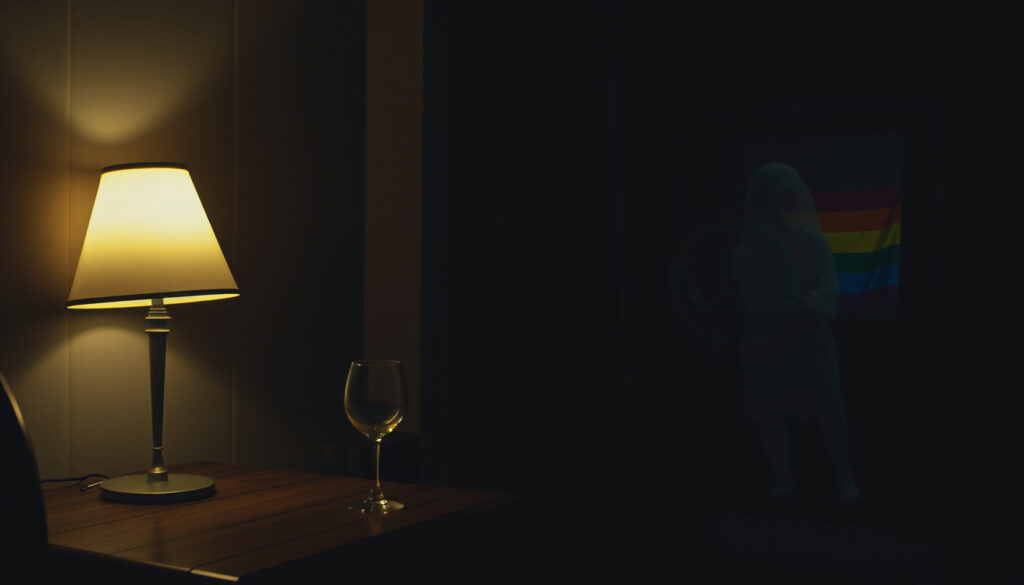
All of Us Strangers: Plot, Ending, LGBT Themes & Ghost Mystery
There’s a moment in All of Us Strangers where a ghost asks for a hug — and it cuts deeper than any horror jump scare. Andrew Haigh’s 2023 film, starring Andrew Scott and Paul Mescal, blends grief, queerness, and the supernatural into a 105-minute meditation on loneliness that leaves you not sure who was alive, who was a ghost, and whether it matters.
Release date: 2023 · Runtime: 105 minutes · IMDb rating: 7.6/10 · Director: Andrew Haigh · Based on: Novel ‘Strangers’ by Taichi Yamada (1987)
Quick snapshot
- Adam is a screenwriter living alone in a London tower block (Wikipedia)
- His parents died in a car crash 30 years earlier (Wikipedia)
- Harry dies from an overdose after Adam rejects him (Grazia Magazine)
- The film ends with Adam and Harry’s ghosts embracing and merging into light (Grazia Magazine)
- Whether the parents are real ghosts or Adam’s hallucinations (Grazia Magazine)
- Whether Harry’s death is literal or symbolic (Grazia Magazine)
- Whether Adam himself is dead or alive at the end (Grazia Magazine)
- The exact time period (1980s vs present) (Grazia Magazine)
- Parents died 30 years before the story (Wikipedia)
- Film released in 2023 (Wikipedia)
- Novel ‘Strangers’ published in 1987 (Grazia Magazine)
- The film is available on streaming services like Hulu and Disney+ (Wikipedia)
- Discussions about queer representation and mental health continue (Grazia Magazine)
- Viewers are encouraged to share interpretations (Grazia Magazine)
Nine key details, one picture: a film that defies easy categorization.
| Attribute | Detail |
|---|---|
| Release Date | 2023 (UK), 2024 (wide) |
| Director | Andrew Haigh |
| Screenplay | Andrew Haigh |
| Based on | Novel ‘Strangers’ by Taichi Yamada |
| Starring | Andrew Scott, Paul Mescal, Claire Foy, Jamie Bell |
| Music | Emilie Levienaise-Farrouch |
| Cinematography | Jamie Ramsay |
| Runtime | 105 minutes |
| Language | English |
What Actually Happens in All of Us Strangers?
The Setup: Adam’s Lonely Life
- Adam (Andrew Scott) is a screenwriter living alone in a near-empty high-rise in London (Wikipedia).
- His parents died in a car crash when he was just a child (Wikipedia).
- He rarely leaves his flat, isolated by grief and repression.
The pattern: a loneliness so thick it becomes a character. Adam’s high-rise feels like a mausoleum for the living.
The Relationship with Harry
- Harry (Paul Mescal) knocks on Adam’s door one night, drunk and holding a bottle of whiskey (Wikipedia).
- Adam initially rejects him but later welcomes him in; they begin a tender romance (Wikipedia).
- Harry confides that he feels distant from his family (Wikipedia).
The catch: what seems like a classic meet-cute is built on a foundation of absence. Both men are running from something.
The Return of His Parents
- Adam travels to his childhood home and finds his parents alive, looking exactly as they did at the time of their deaths (Wikipedia).
- His mother (Claire Foy) carries disfiguring injuries from the crash (Wikipedia).
- Adam comes out to his mother’s ghost, who reacts with fears rooted in the 1980s AIDS crisis (Queer Cinema Catchup (YouTube)).
- He reconciles with his father’s ghost over the silence around childhood bullying (Wikipedia).
The paradox: the parents are ghosts, but they are more present in Adam’s life than they ever were before. These encounters are therapeutic, not terrifying.
The Twist: Are They Real?
- Adam’s parents are revealed to have died in the crash — they are ghosts (Wikipedia).
- Harry’s flat, when Adam finally visits, is empty and covered in grime, with ketamine residue — Harry died of an overdose on the night they first met (Wikipedia) (Grazia Magazine).
- The film ends with Adam and Harry’s ghosts embracing, their bodies dissolving into light as Frankie Goes to Hollywood’s “The Power of Love” plays (Grazia Magazine).
The implication: whether they are dead or alive by the end is the whole point. The film refuses a tidy answer.
Andrew Haigh’s script deliberately blurs the line between ghost story and psychological drama. In an interview with Seventh Row, Haigh notes the film “subverts heteronormative traps with a hopeful tragic ending” — a choice that forces viewers to sit with ambiguity rather than resolve it.
Is All of Us Strangers an LGBT Movie?
Representation: Gay Characters
- The central romance is between two gay men, played by Andrew Scott and Paul Mescal (Wikipedia).
- Adam’s coming‑out scene with his mother anchors the emotional heart of the film (Queer Cinema Catchup (YouTube)).
- Themes of queer loneliness and the cycle of acceptance/alienation are woven throughout (Queer Cinema Catchup (YouTube)).
Themes of Queer Identity
- The film directly references UK laws where gay sex was illegal if others were in the building (Seventh Row).
- Queer cinema critics describe it as a “hopeful tragic ending” that avoids heteronormative tropes (Seventh Row).
Director Andrew Haigh’s Perspective
- Andrew Haigh — a gay director — has said the story draws on his own experiences (Grazia Magazine).
The pattern: this is not a film about being gay — it is a film about being human while gay, where queerness inflects every encounter with grief and love.
Is Adam Mentally Ill in All of Us Strangers?
Adam’s Depression and Grief
- Adam is deeply isolated, unable to move on from his parents’ death 30 years earlier (Wikipedia).
- He writes alone, eats alone, and lives in a building that is nearly empty — symbolic of his emotional state.
- His encounters with his parents feel like therapeutic breakthroughs, not psychotic breaks.
Possible Schizophrenia or Hallucinations
- Adam regularly sees and talks to the dead — a classic symptom of complicated grief disorder or even psychosis.
- Yet the film provides no diagnosis; it leaves open whether the ghosts are real or projections (YouTube Explained Video).
- The ambiguity is deliberate: Haigh wants viewers to question the line between supernatural and psychological.
Interpretation: Supernatural vs Mental Illness
- Some critics argue Adam is not mentally ill — the ghosts are real, and the story is a literal ghost story (Grazia Magazine).
- Others point to Harry’s empty flat as evidence that Adam’s mind is struggling to process loss and loneliness.
- The film never lands on a single answer, and that may be its most honest quality.
The trade-off: either reading is valid, but neither trivializes Adam’s pain. The film treats grief as a force as real as any ghost.
Adam’s parents appear only after he lets Harry in — as if intimacy unlocks the ability to face the past. The film suggests that connection, not medication, is the path through grief.
The implication: Andrew Haigh leaves Adam’s mental state deliberately ambiguous, prioritizing emotional truth over clinical certainty.
Is Harry a Ghost in All of Us Strangers?
Clues That Harry Is a Ghost
- Harry’s apartment is never seen until the final act, when it is revealed to be empty and decaying (Wikipedia).
- Harry appears only to Adam; no other character interacts with him.
- He carries the same whiskey bottle from their first meeting throughout the film (YouTube Explained Video).
The Parallel with Adam’s Parents
- Adam’s parents are ghosts he can talk to; Harry is a ghost who can talk back. The symmetry is deliberate.
- Both sets of characters exist in a liminal space — able to interact with Adam but not with the real world.
- Harry’s confession that he feels distant from his family echoes Adam’s own estrangement from the living (Wikipedia).
The Ending Reveal
- Adam discovers Harry’s body in his flat, confirming Harry died on the night they met (Grazia Magazine).
- The final scene shows both Adam and Harry as ghosts, embracing and dissolving into light (Grazia Magazine).
- Interpretations vary: either Adam was already dead, or he dies after the revelation, or the ending is purely metaphorical.
The implication: calling Harry a ghost is accurate, but also reductive. The film uses the ghost trope to say that love can transcend death — and that loneliness can feel like a haunting.
Is All of Us Strangers Based on a Book?
The Novel ‘Strangers’ by Taichi Yamada
- The film is adapted from the 1987 Japanese novel Strangers by Taichi Yamada (Grazia Magazine).
- In the novel, the protagonist is a middle-aged man in Tokyo who encounters his parents’ ghosts.
- The novel’s ending is much darker and more gothic than the film’s (Grazia Magazine).
Differences Between Book and Film
- The film moves the setting from Tokyo to London and changes the protagonist from a TV scriptwriter to a screenwriter.
- Haigh adds a gay romance that is entirely absent from the original novel.
- The film’s ending is hopeful — the ghosts merge into light — whereas the novel concludes with more ambiguity and dread (Grazia Magazine).
How the Film Adapts the Story
- The core premise — a lonely man reuniting with his long-dead parents — is preserved.
- Haigh uses the ghost concept to explore queer identity and the specific grief of losing parents before you could come out.
- The result is a transformation, not a translation: Yamada’s story becomes Haigh’s own.
The catch: fans of the novel will recognize the skeleton but not the flesh. Haigh’s adaptation is less an homage and more a reimagining.
Confirmed facts
- Adam is a screenwriter living alone
- He meets Harry in his apartment building
- His parents died in a car crash when he was young
- The parents appear as they were at the time of death
- Harry’s apartment is empty and he dies at the end
What’s unclear
- Whether the parents are real ghosts or hallucinations
- Whether Harry’s death is literal or symbolic
- Whether Adam himself is dead or alive at the end
- The exact nature of the time period (1980s vs present)
“All of Us Strangers examines profound grief and love through a fantastical lens.”
— Rotten Tomatoes consensus (Rotten Tomatoes)
“The film subverts heteronormative traps with a hopeful tragic ending.”
— Seventh Row review (Seventh Row)
For queer audiences navigating grief and isolation, All of Us Strangers offers a rare blend of catharsis and ambiguity — one that may stay with you long after the credits roll. Andrew Haigh’s film asks viewers to embrace the unknown, making it a profoundly human story about love and loss.
For a deeper look at the film’s ghost mystery and emotional core, see All of Us Strangers explained.
Frequently asked questions
What is the runtime of All of Us Strangers?
105 minutes.
What year is All of Us Strangers set in?
The film is ambiguous — it straddles the 1980s and the present day, reflecting Adam’s fractured sense of time (Wikipedia).
Is All of Us Strangers a horror film?
It contains ghost‑story elements but is more of a romantic drama and psychological exploration. Some critics compare it to The Sixth Sense (Queer Cinema Catchup (YouTube)).
What age rating is All of Us Strangers?
Rated R for language, sexual content, and drug use.
Does All of Us Strangers have a happy ending?
It is melancholic but hopeful — the lovers reunite in ghostly form, dissolving into light. The tone is more cathartic than tragic (Grazia Magazine).
Why is the film called All of Us Strangers?
The title references the idea that everyone is a stranger to someone else, and that intimacy can bridge even the deepest gaps. It echoes the novel’s title and the film’s theme of encountering unknown versions of loved ones.
Is All of Us Strangers available on streaming services?
Yes, it is available on Hulu and Disney+ in select regions. Check local availability.
More related posts
 Gerard Way: Biography, Personal Life, and Career
 Rodney Dangerfield: Biography, Cause of Death, and Why He Shook
 A Simple Favor 2 – Release Date, Cast, Plot and Reviews
 Cha Eun-woo: Tax Apology, Dating Rumors & Booking Info
 Mu a hi Shred and Burn Review: Doe It Help Weight Lo ?
 Alexis Knapp: Pitch Perfect Star, Ryan Phillippe & Daughter
 Rosa Parks: Bus Incident, Boycott, and Civil Rights Legacy
 John Nolan: British Actor, Musician, and TV Character