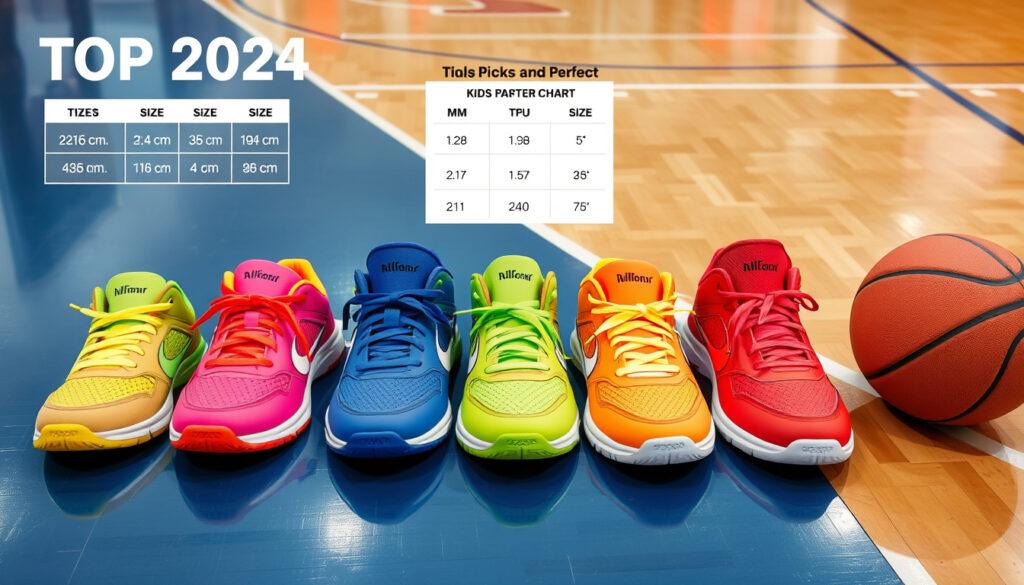
Kids Basketball Shoes – Top 2024 Picks Sizing Guide
What Are the Best Basketball Shoes for Kids?
Selecting the right footwear for young athletes requires balancing performance, durability, and growth accommodation. The best kids’ basketball shoes feature rubber outsoles that withstand outdoor wear, multidirectional traction patterns for quick stops, responsive cushioning for jump impact, and secure fit systems that adapt to developing feet. Major manufacturers like Nike, Adidas, and Under Armour dominate this space, offering specialized youth lines designed for boys and girls across various age groups.
Performance testing from independent reviewers reveals consistent leaders in youth basketball footwear. Nike maintains the broadest selection with models ranging from budget-friendly options under $50 to premium performance shoes exceeding $180. Adidas provides balanced support through its Lightstrike cushioning and herringbone traction, while Under Armour focuses on comfort with its Curry line’s sock-like fit and responsive foam technology.
Parents should prioritize traction and cushioning over aesthetics when evaluating options, as these features directly impact injury prevention and athletic development during formative years. For a comprehensive breakdown of top-rated options, see our dedicated guide to the best basketball shoes for kids that covers specific models across all major brands.
Top Pick Overview
The Nike Freak 5 delivers the best overall value for growing feet, combining sturdy rubber construction with a wide fit that accommodates developing foot shapes. Parents can find this model at outlet prices under $50, making it an economical choice for active children who quickly outgrow their equipment.
For quick guards prioritizing speed, the Nike Sabrina 2 and 3 offer lightweight construction with excellent energy return. Taller players or beginners benefit more from high-top options like the Nike LeBron 21 or 23, which provide superior ankle support through enhanced collar height and padding.
- Nike Freak 5: Best budget option with deals under $50; sturdy rubber and wide fit accommodate growth
- Nike Sabrina 2/3: Lightweight design with best energy return for quick players
- Adidas AE 1: Excellent traction and flexibility under $130
- Under Armour Curry 7: Top comfort ratings at 9/10 with lightweight, breathable construction
- Nike LeBron 21/23: Premium cushioning and ankle support for high-top protection
- New Balance TWO WXY V4/V5: Strong ankle support and versatile performance across positions
Reviews indicate that the Nike GT Cut 3 delivers a bouncy feel through Zoom X foam that “makes you sprint,” while the Adidas DON Issue 7 earns praise for “top tier” traction and cushioning combinations. The Under Armour Curry 7 has been called the “most comfortable Curry” model in recent testing, though its sock-like fit requires accurate sizing.
Quick Facts Snapshot
| Category | Details |
|---|---|
| Average Price Range | $50-$190 |
| Popular Brands | Nike, Adidas, Under Armour, New Balance |
| Key Features | Cushioning, traction, durability, fit security |
| Size Availability | Toddler through adult youth sizing |
| Best for Budget | Nike Freak 5 (under $50 outlet deals) |
| Best Ankle Support | Nike LeBron series, New Balance TWO WXY |
How Do I Choose Basketball Shoes for My Child?
The selection process begins with understanding your child’s playing style and physical needs. Guards who rely on speed and quick direction changes benefit from lighter low-top designs, while power players and centers require the stability and ankle protection that high-top models provide. Evaluating foot shape, growth rate, and primary playing surface helps narrow options to the most appropriate category.
High-Top Versus Low-Top Designs
High-top basketball shoes feature superior padding and elevated collar height that prevents ankle rolls during jumps and lateral movements. According to testing data, these models excel for beginners or taller players who need additional safety features. The tradeoff comes in weight, as the added structure makes high-tops heavier than their low-top counterparts.
Low-top designs sacrifice some ankle protection in exchange for reduced weight and increased mobility. Quick guards benefit most from this configuration, as the lighter build enables faster cuts and acceleration. Nike’s GT Cut 3 exemplifies this approach with its bouncy Zoom X foam that enhances speed without compromising stability.
For youth specifically, experts recommend high-tops for beginners building foundational skills, while more experienced players with strong technique can safely use low-tops if they prioritize speed over ankle coverage.
Brand Comparisons
Nike dominates the youth basketball shoe market with the widest selection and strongest overall performance ratings, particularly in cushioning technology through ZoomX and Air Zoom systems. Testing shows Nike models achieve 9.5 out of 10 scores for shock absorption, with the LeBron 23 demonstrating 112 shock absorption units in laboratory measurements.
Adidas offers reliable alternatives through its Lightstrike and Lightboost cushioning platforms, which provide balanced support without the premium pricing of Nike’s top-tier models. The AE series represents the brand’s evolution toward lighter, more stable constructions suitable for youth athletes.
Under Armour concentrates on comfort through its Curry line, featuring decoupled Flow outsoles and responsive foams that deliver a fluid feel during play. The Curry 7 receives consistent praise as the most comfortable model in the line, though the sock-like fit requires accurate sizing rather than ordering up for growth room.
When comparing brands, prioritize the specific feature your child needs most: Nike for cushioning technology, Adidas for balanced stability, or Under Armour for all-day comfort. Each brand offers youth-specific models with size ranges accommodating children from toddler through early teen years.
What Size Basketball Shoes Should My Kid Wear?
Accurate sizing forms the foundation of proper basketball shoe selection, yet no universal sizing chart exists that applies across all manufacturers. General guidance suggests ordering true to size for shoes with sock-like fits, such as Under Armour’s Curry line, while adding half a size to Nike and Adidas youth models to accommodate growth during the season.
Measuring at Home
Parents can measure their child’s feet at home using a simple ruler or measuring tape. Measure both foot length and width while the child stands, as feet spread under body weight. Compare these measurements against each brand’s specific sizing guide, since youth sizes run small across the industry and vary between boys’ and girls’ fits.
Growth accommodation requires leaving approximately half a thumb’s width of space between the longest toe and the shoe’s front. This room allows for natural foot expansion during activity while preventing the discomfort and potential injury that cramped toes create.
Wide Fit Options
Children with wider foot shapes face limited options but can find suitable models in Nike’s Freak series and New Balance’s TWO WXY line. These shoes feature flexible uppers and wide toe boxes that accommodate broader feet without requiring a full size increase. The Rookie Kids guide on sizing emphasizes testing for width alongside length when selecting youth basketball footwear.
Age-Based Recommendations
Children ages 8-12 experience rapid foot growth that may require checking fit monthly during growth spurts. For this age group, prioritizing adjustable lacing systems and roomy toe boxes extends the functional lifespan of each pair. Parents should budget for multiple purchases per season if growth accelerates unexpectedly.
What Features Matter in Kids Basketball Shoes?
Four primary features determine whether a basketball shoe performs adequately for youth athletes: durability, cushioning, traction, and fit security. Each contributes to safety and performance during the demanding movements basketball requires, from jumping and landing to sudden direction changes and rapid stops.
Durability for Active Use
Thick rubber outsoles resist premature wear, especially important for children playing on outdoor courts where concrete and asphalt accelerate deterioration. Testing shows models like the Nike Freak 5 hold up well over extended use, maintaining traction and support despite heavy play. Parents should expect quality youth basketball shoes to last 3-6 months of regular use before cushioning compression reduces protection.
The outsole pattern reveals durability expectations. Shoes with continuous rubber coverage and deep grooves maintain structure longer than thin, shallow-treaded designs. For outdoor play, prioritize models specifically rated for hardwood and outdoor surfaces.
Cushioning and Impact Protection
Responsive cushioning systems reduce stress on growing joints during jumping and landing. Nike’s Zoom Air and Under Armour’s supercritical foam provide low-profile protection that balances court feel with impact absorption. Research published in the Journal of Sports Science and Medicine demonstrates that proper cushioning correlates with reduced injury risk during high-impact athletic activity.
Traction Patterns
Herringbone and multidirectional traction patterns grip court surfaces during quick stops and cuts. These patterns prove essential for young players still developing body control and technique. Shoes lacking adequate traction increase slip risk and force children to compensate through unsafe movement patterns.
Breathability and Weight
Lightweight textile uppers improve agility, particularly beneficial for guard positions requiring frequent direction changes. Breathable materials also reduce moisture buildup during extended play, preventing discomfort and potential blistering. However, breathability should not compromise the structural integrity needed for ankle support in high-top designs.
The Evolution of Youth Basketball Footwear
Youth basketball shoe technology has advanced significantly over the past decade, with manufacturers adapting adult innovations for younger athletes. The 2010s saw a shift toward lightweight models prioritizing speed, while the 2020 foam technology boom introduced responsive cushioning previously reserved for professional athletes.
- Early 2010s: Manufacturers began producing dedicated youth lines, moving away from simply shrinking adult models
- 2020: Foam technology became standard in youth basketball shoes, bringing responsive cushioning to younger age groups
- 2023-2024: Sustainable materials entered youth lines as brands responded to environmental concerns
- 2024-2025: Current models emphasize growth accommodation and wide-fit options specifically designed for developing feet
Recent releases like the Nike LeBron 23 and upcoming 2025 models demonstrate continued refinement of youth-specific features, with manufacturers increasingly recognizing that children require different design considerations than adult athletes.
What We Know and What Remains Unclear
Research and testing provide clear guidance on certain aspects of youth basketball shoe selection, while other questions remain answered or depend heavily on individual circumstances.
Certain: Proper cushioning reduces impact stress on developing joints. Traction patterns prevent slips and unsafe compensation movements. Wide-fit options accommodate broader foot shapes safely. Uncertain: Exact replacement frequency varies based on play intensity, body weight, and court surface. Long-term developmental impacts of specific shoe features remain difficult to study longitudinally in youth populations.
Confirmed Benefits
Proper basketball footwear demonstrably reduces joint stress during jumping activities. Adequate ankle support prevents rolls during lateral movements. Durable outsoles maintain protective features throughout reasonable use periods. Wide-fit designs prevent the discomfort and potential foot problems that narrow toe boxes create for broader foot shapes.
Areas Requiring Individual Assessment
The ideal replacement timeline depends on usage patterns, as children who play daily require replacement sooner than weekend players. The performance difference between high-top and low-top designs for specific foot anatomies varies case by case. Whether premium cushioning technology justifies higher prices for recreational players remains a personal decision based on budget and playing frequency.
Why Proper Basketball Shoes Matter for Young Athletes
Children’s feet continue developing through the early teenage years, making proper footwear selection particularly important during this window. Basketball involves repeated high-impact movements that stress growing bones and joints, creating both opportunity and risk depending on equipment quality.
Common mistakes parents make include prioritizing aesthetics over functionality, selecting shoes too small for growth accommodation, and continuing to use worn-out equipment beyond its useful lifespan. Performance-focused models like those tested by RunRepeat undergo evaluation specifically for youth athletic demands.
Distinguishing between competitive performance shoes and casual lifestyle footwear matters for young athletes. True basketball shoes provide court-specific traction, ankle support, and cushioning systems that casual sneakers lack. Using proper athletic footwear reduces injury risk while improving performance through appropriate technology application.
What Parents and Coaches Recommend
Youth basketball coaches frequently emphasize ankle support for developing players, recommending high-top models for athletes still mastering fundamental movement patterns. Retail specialists at DICK’S Sporting Goods note that parents often underestimate the importance of proper fit, particularly width accommodation.
Test for wide feet and growth room to ensure safety. Prioritize traction and cushioning over aesthetics when selecting youth basketball footwear.
— Rookie Kids Basketball Shoe Guide
Parents sharing reviews consistently highlight durability as a primary concern, with many noting frustration when inexpensive shoes deteriorate within weeks of purchase. Those who invested in tested models from Nike, Adidas, or Under Armour report longer serviceable lifespans even with heavy use.
Summary: Key Takeaways for Buyers
Selecting the right basketball shoes for children requires balancing multiple factors including playing position, foot shape, growth rate, and budget. Nike offers the broadest selection with options at various price points, from outlet deals under $50 to premium performance models exceeding $180. Adidas and Under Armour provide strong alternatives focused on stability and comfort respectively.
For parents seeking immediate guidance: prioritize traction and cushioning features, select appropriate silhouettes based on ankle support needs, account for growth through proper sizing with room to spare, and replace shoes every 3-6 months for active players. Looking back at our top recommendations, the Nike Freak 5 continues to deliver exceptional value across multiple seasons of youth play.
Frequently Asked Questions
How much do kids basketball shoes typically cost?
Prices range from under $50 for budget options to $190 for premium models. Most quality youth basketball shoes fall between $90 and $130.
Where can I purchase kids basketball shoes online?
Major retailers include Nike.com, Adidas.com, UnderArmour.com, and DICK’S Sporting Goods. Each offers size guides and return policies suited for youth sizing uncertainty.
Do basketball shoes help with children’s foot development?
Proper basketball shoes provide support during athletic activity but cannot accelerate foot development. They can, however, prevent injury and discomfort that might discourage continued participation.
How often should youth basketball shoes be replaced?
Active players should replace basketball shoes every 3-6 months. Signs of wear include compressed cushioning, smoothed traction patterns, and visible outsole deterioration.
Are expensive basketball shoes worth it for kids?
Premium models offer better cushioning technology and durability but aren’t always necessary for recreational players. Budget options like the Nike Freak 5 provide adequate performance at significantly lower prices.
What’s the difference between boys’ and girls’ basketball shoes?
Primary differences include width availability and style preferences. Many unisex models accommodate both, though girls’ feet tend to be narrower on average, potentially benefiting from specific wide-fit options.
Can kids use adult basketball shoe sizes?
Youth sizing typically covers sizes through adult 7. Beyond that, young athletes can transition to adult sizing, though adult models may lack youth-specific features like growth accommodation and extra ankle padding.