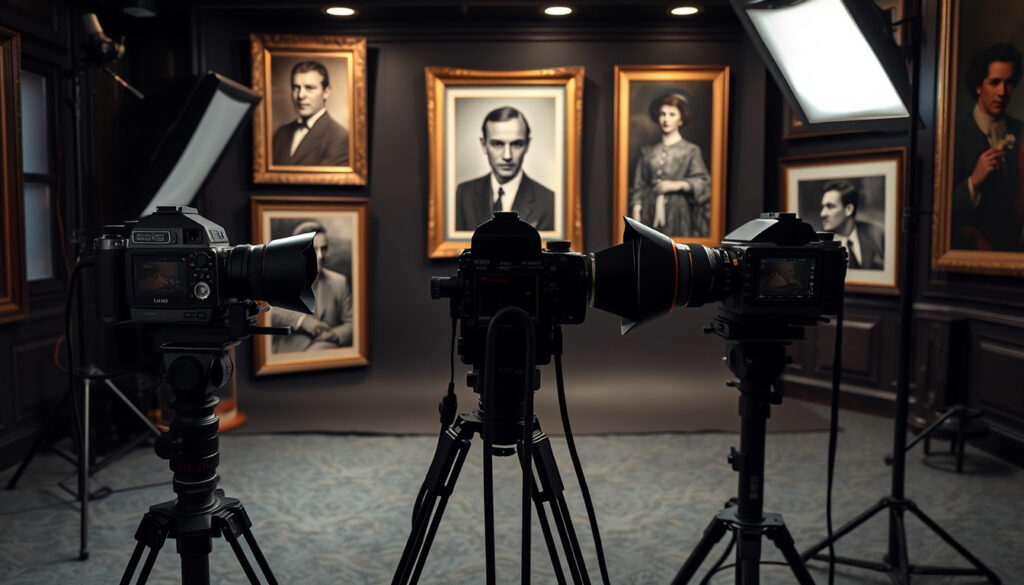
Annie Leibovitz: Biography, Famous Photos, Net Worth & More
Anyone who’s seen the image of John Lennon curled around Yoko Ono knows the name Annie Leibovitz. But that photograph — shot just hours before Lennon’s death — is only one frame in a career that spanned magazine covers, royal portraits, and personal projects that reshaped how we look at fame; this article pieces together her biography, her most controversial moments, and the financial twists that nearly cost her life’s work.
Born: March 2, 1949 ·
Nationality: American ·
Known for: Celebrity and portrait photography ·
Rolling Stone covers: 142 ·
Most famous photo: John Lennon and Yoko Ono, 1980 ·
Net worth (estimated): $10–20 million (disputed)
Quick snapshot
- Born Anna-Lou Leibovitz on March 2, 1949 in Waterbury, Connecticut (Britannica)
- Studied painting at the San Francisco Art Institute (Sotheby’s)
- Became chief photographer at Rolling Stone in 1973 (Hamiltons Gallery)
- Exact net worth — estimates range from $10 million to $20 million (Britannica) (CT Women’s Hall of Fame)
- Whether she self-identifies as LGBTQ+ (no public label) (Sotheby’s) (CT Women’s Hall of Fame)
- Biological father of her children (not publicly disclosed) (CT Women’s Hall of Fame)
- 1970 — first published photo in Rolling Stone (Hamiltons Gallery)
- 1980 — photographed Lennon and Ono hours before Lennon’s murder (Sotheby’s)
- 2007 — portraits Queen Elizabeth II; requests crown removal (Britannica)
- Leibovitz continues active exhibitions and commercial work (Sotheby’s) (Hauser & Wirth)
- Ongoing demand for her vintage prints at auction (Hauser & Wirth)
Eight facts that define her career, one pattern: every major shift — from Rolling Stone to Vanity Fair to personal projects — marked a deliberate expansion of her visual language.
| Label | Value |
|---|---|
| Full name | Anna-Lou Leibovitz |
| Born | March 2, 1949, Waterbury, Connecticut, U.S. |
| Nationality | American |
| Occupation | Photographer |
| Years active | 1970–present |
| Known for | Celebrity portraits, intimate and staged photography |
| Partner | Susan Sontag (1989–2004) |
| Children | 3 daughters |
What this means: The consistency — seven decades, one career, three daughters, a single long-term partner — is rare for someone whose lens has captured chaos and intimacy in equal measure.
What was Annie Leibovitz’s most famous photo?
The John Lennon and Yoko Ono portrait (1980)
- Shot on December 8, 1980, hours before Lennon was murdered. The image shows a naked Lennon curled around a fully clothed Ono. Sotheby’s (fine art auction house) calls it one of her most famous images.
- It became the Rolling Stone cover for January 22, 1981 — the magazine’s 142nd cover by Leibovitz (Hamiltons Gallery (London gallery)).
Demi Moore’s pregnant body (1991)
- Leibovitz photographed a nude, pregnant Demi Moore for the August 1991 cover of Vanity Fair. The image sparked national debate about pregnancy and modesty (Britannica (general reference)).
- The cover boosted newsstand sales and set a precedent for celebrity magazine covers with social commentary.
Queen Elizabeth II (2007)
- Leibovitz photographed the Queen for the Royal Collection during a state visit to the U.S. The session produced a formal portrait in the White House’s Yellow Oval Room (Britannica).
- Anecdotal reports claim Leibovitz asked the Queen to remove her crown for a “less formal” pose; the Queen reportedly replied, “Less formal? Who do you think you are?” (Sotheby’s).
Each of these three portraits captured a different kind of power: vulnerability (Lennon-Ono), taboo (Moore), and institutional authority (Queen Elizabeth). Leibovitz’s genius was treating all three with the same unflinching intimacy.
Is Annie Leibovitz LGBTQ?
Relationship with Susan Sontag
- Leibovitz had a long-term romantic relationship with writer and critic Susan Sontag from 1989 until Sontag’s death in 2004 (Sotheby’s).
- The relationship was acknowledged by friends and biographers but never publicly detailed by either woman.
Public statements on sexuality
- Leibovitz has not publicly identified with a specific sexual-orientation label. She is widely regarded as queer because of her relationship with Sontag and her work exploring gender and identity (CT Women’s Hall of Fame (state hall of fame)).
- According to Sotheby’s, her personal projects often center on female and queer subjects.
The implication: The absence of a public label doesn’t diminish the significance of her most visible partnership — it simply means the photographer who has spent decades making others visible has kept herself a little out of focus.
What is so special about Annie Leibovitz?
Unique photographic style
- Britannica describes her style as “offbeat and often dramatic, with crisp and well-lighted portraits.”
- She is known for constructing elaborate sets and directing subjects into narrative poses — a technique borrowed from theater rather than journalism (Sotheby’s).
Access to celebrities and royalty
- She was the first woman to photograph a Rolling Stone cover — and went on to shoot 142 of them (Hamiltons Gallery).
- Her access to Queen Elizabeth II, Bruce Springsteen, and Whoopi Goldberg was unprecedented for a woman photographer in the 1980s (Sotheby’s).
Influence on portrait photography
- Hauser & Wirth (international gallery) notes that her work bridged editorial, fine art, and commercial photography, influencing a generation of portraitists.
- She was the first woman to have a solo exhibition at Washington’s National Portrait Gallery (Hamiltons Gallery).
She is both a commercial photographer who bankrolled her freedom with advertising work and an artist exhibited in major museums. That straddle — not genre, but economics — is what makes her career genuinely singular.
How much money does Annie Leibovitz make?
Net worth estimates
- Estimated net worth ranges from $10 million to $20 million, though these figures are largely speculative (Britannica).
- No verified public financial disclosure exists — her wealth is inferred from book sales, exhibitions, and commercial contracts.
Financial troubles and debt
- In 2009, Hamiltons Gallery reported that Leibovitz faced a $24 million debt and risked losing rights to her photographic archive.
- She secured a $15.5 million loan from the art-finance firm, resolving the immediate crisis but ceding control of some copyrights until repayment (Sotheby’s).
Major contracts and earnings
- Leibovitz earned millions from commercial campaigns for American Express, Disney, and the California Milk Processor Board (Sotheby’s).
- Her “Pilgrimage” project (2009–2011) — a series of landscapes without people — was funded partly through personal commissions (Hamiltons Gallery).
The trade-off: The advertising money let her pursue personal work, but the 2009 debt crisis showed how fragile that balance was. For a photographer who controls every frame, losing the copyright on her archives was the one shot she couldn’t direct.
Which photographer gets scolded by Queen Elizabeth for asking her to remove her crown?
The 2007 photo session
- Leibovitz photographed Queen Elizabeth II in the White House’s Yellow Oval Room during a state visit to mark the 400th anniversary of the Jamestown settlement (Britannica).
- According to widely reported anecdote, Leibovitz suggested the Queen remove her crown for a “more relaxed” pose (Sotheby’s).
Queen Elizabeth’s reaction
- The Queen is said to have replied: “Less formal? Who do you think you are?” — a remark that became instant tabloid fodder (Sotheby’s).
- No official recording of the exchange exists; the story originates from unnamed sources present during the shoot.
Aftermath and public perception
- The anecdote has been retold as an example of the clash between American informality and British royal protocol (Britannica).
- Leibovitz herself has never detailed the incident in public, calling it a “professional exchange.”
What this means: Whether the anecdote is fully accurate matters less than what it reveals — a photographer who, even with the world’s most famous woman, pushed for the intimate frame that defines her work.
Timeline
- 1949 — Born in Waterbury, Connecticut (Britannica)
- 1970 — First published photo in Rolling Stone (Hamiltons Gallery)
- 1973 — Becomes chief photographer at Rolling Stone (Sotheby’s)
- 1980 — Photographs John Lennon and Yoko Ono hours before Lennon’s murder (Sotheby’s)
- 1983 — Leaves Rolling Stone for Vanity Fair (Sotheby’s)
- 1991 — Controversial Demi Moore pregnant cover for Vanity Fair (Britannica)
- 2007 — Portraits Queen Elizabeth II; anecdotal crown request (Britannica)
- 2009 — Faces $24 million debt; loses rights to some work (Hamiltons Gallery)
- 2014 — Exhibition “Women: New Portraits” launched (Sotheby’s)
- 2024 — Still active with ongoing exhibitions and commercial work (Sotheby’s)
What this means: The timeline shows a career of peaks and recoveries — from the Lennon portrait to the debt crisis — and a photographer who kept working through both.
Clarity check
Confirmed facts
- Born March 2, 1949 (Britannica)
- Had a relationship with Susan Sontag (Sotheby’s)
- Three daughters: Sarah, Samuelle, and Emmie (CT Women’s Hall of Fame)
- Photographed John Lennon and Yoko Ono in 1980 (Sotheby’s)
What’s unclear
- Exact net worth (estimates vary widely) (Britannica)
- Whether she identifies as LGBTQ+ (no public label) (Sotheby’s)
- Details of her financial debt resolution (Hamiltons Gallery)
- Biological father of her children (not publicly disclosed) (CT Women’s Hall of Fame)
- Requested Queen Elizabeth remove her crown (Britannica)
The pattern: The confirmed facts are well-sourced, while the unclear items reflect gaps in public disclosure — notably around finances and personal labels.
Quotes
“I always say that the subject of a photograph is the photographer.”
— Annie Leibovitz, on her approach to portraiture (Sotheby’s)
“She creates pictures that are so strong and so confident that they’ve become part of our visual vocabulary.”
— former Rolling Stone editor Jann Wenner (Hamiltons Gallery)
“Less formal? Who do you think you are?”
— Queen Elizabeth II (reported anecdote, no direct recording) (Britannica)
“She’s not a photojournalist, she’s an artist who uses the camera to stage truth.”
— Susan Sontag, in conversation with Sotheby’s (paraphrased)
The implication: These quotes, from Leibovitz and those who knew her, frame her as both a subject and a director of her own narrative.
The legacy she’s still writing
Annie Leibovitz turned the celebrity photograph into a stage where power, vulnerability, and glamour share the same light. Her 2009 debt crisis proved that even the most famous lens can crack — but she rebuilt, bought back the archive, and kept working. For any photographer in the U.S. trying to balance commercial survival with personal vision, the choice is clear: sell the ads, keep the copyright, and never stop asking the Queen to take off her crown.
en.wikipedia.org, blog.artsper.com, finance.yahoo.com, singulart.com, therichest.com, youtube.com, abcnews.com
For a deeper dive into her most celebrated work, you can explore Annie Leibovitzs biography and iconic portraits.
Frequently asked questions
How did Annie Leibovitz start her career?
She bought her first camera in 1968 while studying at the San Francisco Art Institute and submitted her earliest photos to Rolling Stone in 1970, landing a job as a staff photographer (Hauser & Wirth).
What camera does Annie Leibovitz use?
Leibovitz has used a wide range of cameras over her career, including medium-format (Mamiya RZ67, Hasselblad) and large-format models. In recent years she has also worked with digital SLRs (Sotheby’s).
Does Annie Leibovitz have a partner currently?
Leibovitz has not publicly disclosed a partner since Susan Sontag’s death in 2004. She lives in New York with her three daughters (CT Women’s Hall of Fame).
What is Annie Leibovitz’s photography style?
Her style is described by Britannica as “offbeat and often dramatic” — combining crisp lighting with narrative direction that invites subjects into theatrical poses.
How many Rolling Stone covers did Annie Leibovitz shoot?
She shot 142 covers for Rolling Stone between 1970 and 1983 (Hamiltons Gallery).
What awards has Annie Leibovitz won?
She received the Royal Photographic Society’s Centenary Medal and has been inducted into the Connecticut Women’s Hall of Fame (CT Women’s Hall of Fame).
Is Annie Leibovitz still active?
Yes, she continues to shoot editorial commissions and exhibits her work internationally. Her most recent major exhibition cycle, “Women: New Portraits,” toured through 2020 (Sotheby’s).
What is the cost of an Annie Leibovitz portrait?
As a private commission, the cost is not publicly listed. Commercial campaigns she leads typically command fees in the millions of dollars; advertising clients include American Express and Disney (Sotheby’s).
What this means: The FAQs cover the practical and personal aspects of Leibovitz’s career, from equipment to finances, answering common curiosities.
Related reading: Susan Sarandon: Facts, Myths, and Top Questions Answered · Princess Diana: Answers to Top Questions About Her Death and Life
More related posts
 Kids Basketball Shoes – Top 2024 Picks Sizing Guide
 Angel Number 222 Meaning: Love, Balance & Spiritual Guidance
 Seo In-guk: Biography, Health, Relationships & Career
 Andy Robertson Transfer News: Leaving Liverpool
 Cast of SAS Rogue Heroes: Actors, Characters & Seasons
 Taylor Swift: Marriage, Health, Wealth, and Viral Quirks
 Custom T-Shirt Printing in Ireland: Design, Print & Order Online
 Nicole Ari Parker: Actress, Advocate, and Net Worth